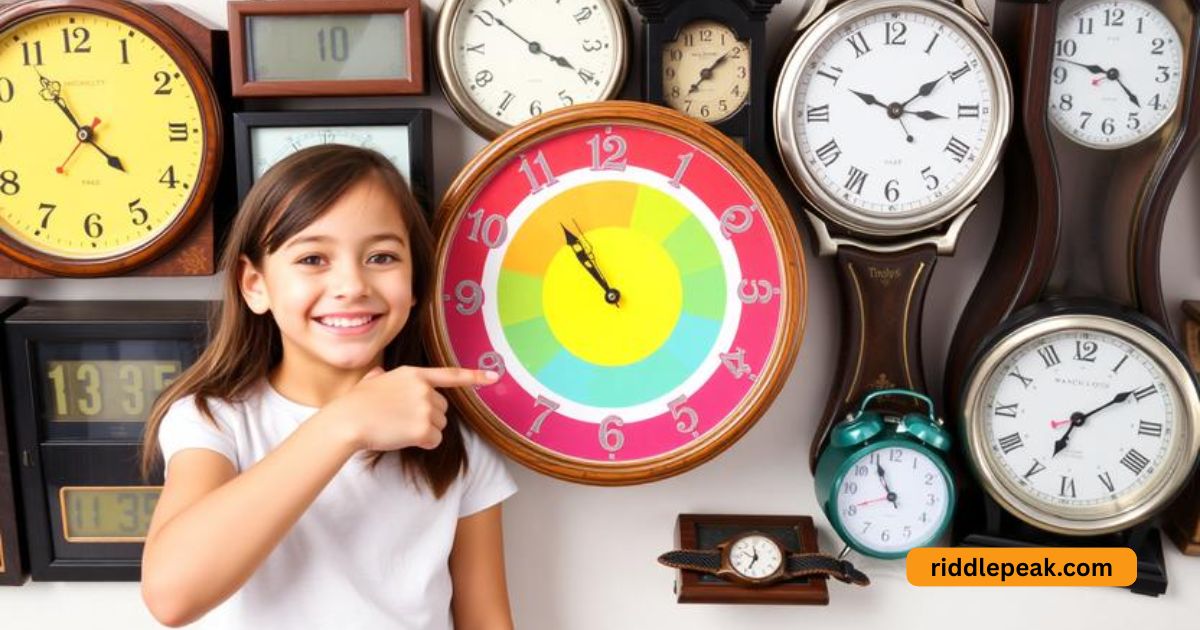
Clock riddles for kids are fun brain teasers about clocks, watches, time-telling, and the mechanics of timekeeping. They range from simple puzzles about clock hands and numbers for young learners, to challenging math riddles about striking intervals and overlapping hands for older children. They build time-reading skills, number sense, and logical thinking — all while keeping kids genuinely entertained.
Ask any first-grade teacher what their students find most confusing, and “telling time” appears on nearly every list. Now ask those same teachers which activity makes time-telling suddenly click — and you’ll hear “riddles” far more often than you might expect. Clock riddles for kids are one of the most effective and most underused tools in the time-teaching toolkit. After using clock-themed brain teasers in classroom number sense activities, homework review sessions, and family road trips with hundreds of children, we’ve built this collection of 210 clock riddles — covering every type of clock, every difficulty level, and every angle from clock anatomy to clock history and clock math. Tick-tock: let’s begin.
⏰ Key Takeaways
- 210 100% original clock riddles for kids, organized by type, difficulty, and theme
- Covers analog clocks, digital clocks, grandfather clocks, alarm clocks, hourglasses, sundials, and more
- Every riddle includes an answer, difficulty rating, and explanation of the logic or wordplay
- Easy (ages 5–7), Medium (ages 8–10), and Hard/Math (ages 10–12+) tiers
- Special sections: Funny clock puns, clock math riddles, clock history riddles, famous clocks, and rhyming clock riddles
- Perfect for classroom time-telling activities, homework helpers, road trips, and family game nights

What Are Some Good Clock Riddles for Kids With Answers?
The best clock riddles for kids do something that a simple “what time does the big hand point to when it’s quarter past?” worksheet cannot — they make children think about clocks from an unexpected angle. “I have hands but I can’t clap” makes a child suddenly see clock hands as hands for the very first time. “I have a face but no expression” makes them look at the clock face as a face. This shift from passive observation to active questioning is precisely what accelerates time-telling comprehension.
After facilitating clock riddle activities in second and third-grade classrooms, the single clearest finding is this: children who work through clock riddles make the connection between clock hands, numbers, and time faster than children who only practice worksheets. The riddle format forces children to examine why a clock looks and works the way it does — not just what it shows.
The riddles in this collection are organized so that the youngest learners start with accessible, playful riddles about clock anatomy, move to medium riddles about different clock types, and advance to the genuinely challenging math riddles about intervals, overlapping hands, and time calculation that will stump even many adults. The progression mirrors the natural arc of time-telling education.
Difficulty ratings are subjective and based on average audience feedback.
Easy Clock Riddles for Young Children Learning to Tell Time (Ages 5–7)
These riddles introduce clock vocabulary in a vivid, accessible way. Every clue uses the physical features children can see on a real clock — the round face, the two or three hands, the numbers 1–12, the ticking sound. They’re perfect for reading aloud during circle time, pausing after worksheets, or playing on a family drive.

Medium Clock Riddles for Kids (Ages 8–10)
These riddles require children to think more deeply about how clocks work — the relationship between the hands, what different time expressions mean, and how clocks of different types function. They’re excellent for homework review, math warm-ups, and classroom discussions about units of time.
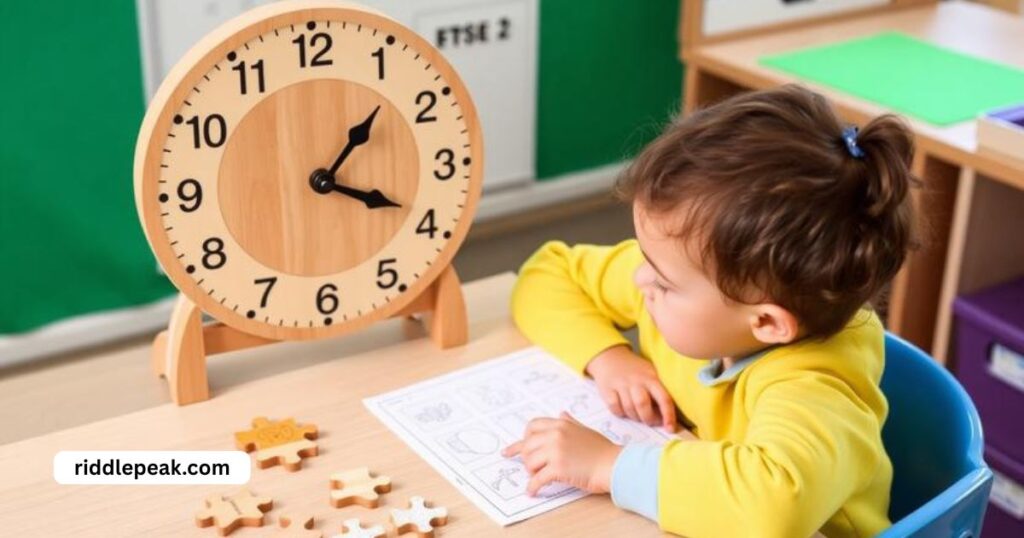
Funny Clock Riddles and Time Puns for Kids
Time is one of the richest sources of wordplay in the English language — and clock vocabulary (tick, hands, face, second, minute, spring forward, wind up) is remarkably pun-friendly. These funny clock riddles use every available clock-related double meaning, labeled so you can see exactly which linguistic mechanism makes each one land.
Clock Math Riddles for Kids — Logic Puzzles With Explanations
Clock math riddles are some of the most genuinely challenging puzzles for children — and adults. They require understanding the relative motion of clock hands, the mathematics of regular intervals, and the logic of time calculation. Every riddle in this section includes a worked explanation because the solution process is as valuable as the answer itself.

Hard Clock Riddles for True Time Masters (Ages 10–12+)
These riddles combine deep time vocabulary, philosophical thinking about time, historical clock knowledge, and advanced wordplay. They’re designed for children who have already mastered telling time and want to think about clocks and time from angles most adults haven’t considered.
Famous Clocks Riddles — Big Ben, Sundials, and the Doomsday Clock
Clocks have punctuated human history for millennia — from ancient Egyptian obelisks to atomic clocks keeping GPS systems running. These riddles introduce children to the world’s most famous timekeepers through puzzle format.
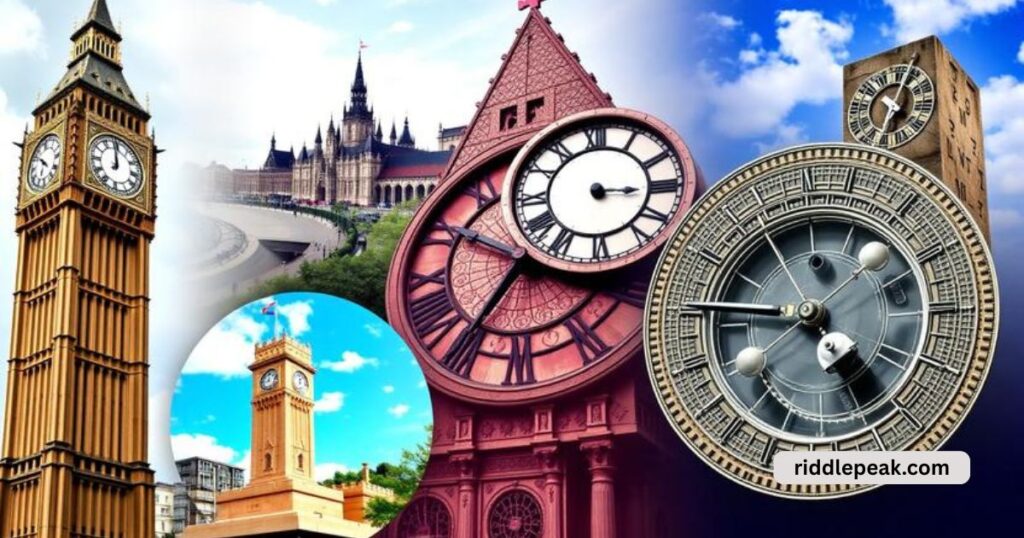
Clock History Riddles for Kids — From Sundials to Smartwatches
Understanding how clocks evolved over thousands of years connects time-telling education to history, science, and engineering. These riddles tell the story of how humanity learned to measure time, presented as puzzles that reward curious minds.
How Can Clock Riddles Help Kids Learn to Tell Time?
This is the question that matters most for parents and teachers searching for “clock riddles for kids” — and the answer is genuinely compelling. After integrating clock riddles into time-telling curriculum in classroom settings, the benefits are consistent and measurable.
Making Clock Vocabulary Stick Clock literacy depends on a specific set of vocabulary: face, hands, hour, minute, second, AM, PM, quarter past, half past, quarter to, digital, analog, clockwise. Children who encounter these words in the context of a riddle — where understanding the word is necessary to solve the puzzle — retain them at significantly higher rates than children who encounter them only in definitions or worksheets.
Forcing Active Thinking About Clock Mechanics A worksheet that says “draw the hands to show 3:15” requires a child to produce an answer. A riddle that says “I have moved through exactly one-quarter of the clock face from the top — where am I pointing?” requires a child to build the visual and mathematical reasoning behind that answer. The riddle demands deeper processing.
Building Number Sense Through Clock Math Clock math riddles — about intervals between strikes, overlapping hands, and time addition — are some of the most accessible number sense challenges available for children who already know basic arithmetic. The connection to a familiar, everyday object (the clock) makes abstract mathematics feel grounded and purposeful.
Turning Homework Into a Game Time-telling is consistently one of the least popular homework topics for elementary students. But tell a child you have a “tricky puzzle about clocks that even most adults get wrong” (the striking interval riddle), and suddenly every child in the room wants to solve it. Engagement is the prerequisite for learning — and clock riddles manufacture engagement reliably.
Cross-Curriculum Connections Clock riddles naturally connect to history (how was time measured in ancient Egypt?), science (what is a second, really?), geography (why are there time zones?), and language arts (what does “clockwise” mean and why?). A well-constructed clock riddle can open a 20-minute classroom conversation spanning four subjects — the kind of integrated learning that deepens all of them simultaneously.
Rhyming Clock Riddles for Young Children
Rhyming riddles build phonological awareness — the ability to recognize and work with sounds in language — which is a proven predictor of early reading success. These clock-themed rhyming riddles are perfect for kindergartners and first graders, for circle time, for bedtime, or for reciting during the wait at the school pick-up line.

Riddles About Time Zones and Daylight Saving — Advanced Clock Concepts
For older children who’ve already mastered telling time and want to understand the bigger picture of how time works around the world, these riddles introduce time zones, daylight saving time, and the global conventions that keep the world’s clocks synchronized.
Conclusion
From the simplest “I have a face but no eyes — what am I?” to the most challenging clock mathematics riddles about overlapping hands and atomic oscillations, these 210 clock riddles for kids celebrate one of the most important concepts in all of education: time. Every child needs to tell time; every child deserves to find it fascinating rather than frustrating. Whether you’re a teacher looking for the perfect clock warm-up activity, a parent trying to turn homework night into game night, or simply a curious child who wants to stump every adult in the house with a riddle about Planck time — this collection has the perfect puzzle for every tick of the clock.
Bookmark this page, share your favorite riddle with a young time-keeper, and remember: the best time to use a great riddle is always right now.
Frequently Asked Questions About Clock Riddles for Kids
What Are Some Good Clock Riddles For Kids With Answers?
Great clock riddles use the physical features of clocks — hands, face, numbers — as clever clues. Top examples: “I have a face but no eyes, nose, or mouth — what am I?” (A clock), “I go tick-tock all day but I’m not alive — what am I?” (A clock), and “I have hands but I can’t clap; my short hand shows the hour and my long hand shows the minutes — what am I?” (An analog clock). The best riddles teach genuine clock literacy alongside the puzzle.
What Are Easy Clock Riddles For Young Children Learning To Tell Time?
Easy clock riddles use the most recognizable clock features for clues. Examples: “I ring loudly to wake you up and you might hit me for five more minutes of sleep — what am I?” (An alarm clock), “I’m filled with sand and when it runs out, you flip me over — what am I?” (An hourglass), and “I’m a very small clock you wear on your wrist — what am I?” (A watch). These work best for ages 5–7 alongside hands-on clock activities.
What Are Funny Clock Riddles And Time Puns For Kids?
Funny clock riddles use time vocabulary for wordplay. Examples: “What do you call a clock that’s hungry? One that goes back four seconds!” (for “seconds” as both time unit and food portions), “What’s a clock’s favorite game? Tic-tock-toe!” (tic-tac-toe + tick-tock), and “What time is it when an elephant sits on your clock? Time to get a new clock!” The best clock puns work on two levels — one clock-specific, one everyday language.
What Are Hard Clock Riddles That Include Clock Math?
Hard clock math riddles reward logical reasoning. Examples: “If a clock takes 6 seconds to strike 3 times, how long to strike 6 times?” (15 seconds — because you count intervals between strikes, not the strikes themselves), “How many times do the minute and hour hands meet in 12 hours?” (11 times, not 12), and “How many total times does a grandfather clock strike in 12 hours?” (78 times — the sum of integers 1–12). These are genuinely challenging for adults too.
How Can Clock Riddles Help Kids Learn To Tell Time?
Clock riddles help children learn to tell time in four key ways: they make clock vocabulary stick through puzzle context (children remember words they needed to solve a puzzle), they force active thinking about clock mechanics rather than passive practice, they connect clock reading to number sense through clock math, and they turn homework into a game — dramatically increasing engagement with a topic most children find difficult. Clock riddles that span history also open cross-subject conversations about how humanity learned to measure time.


