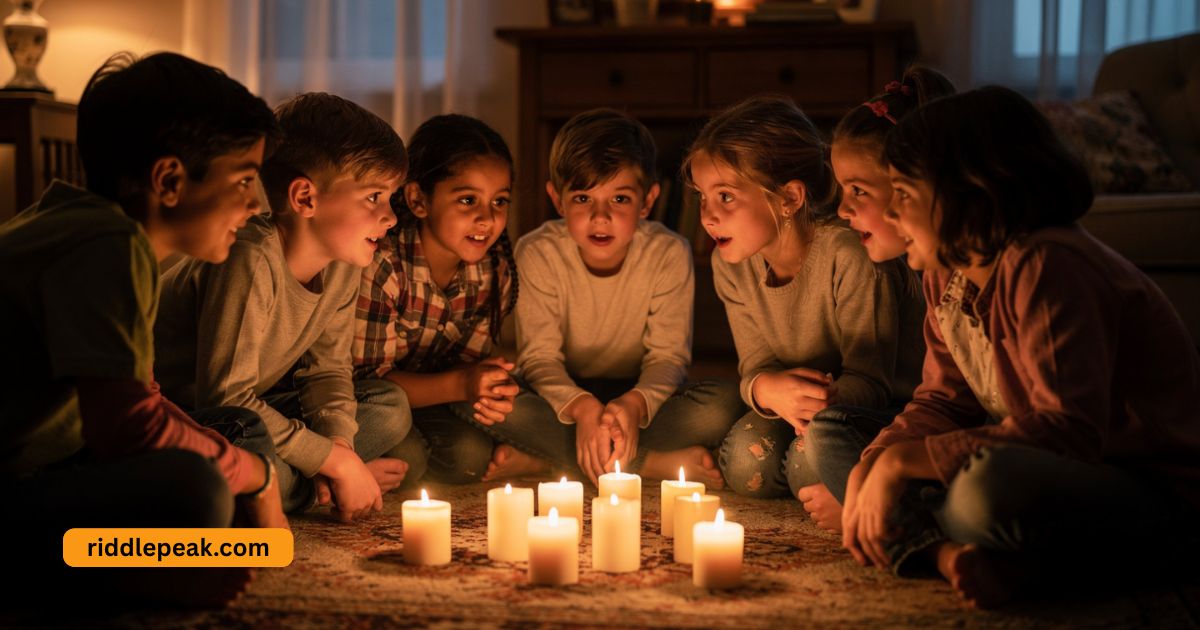
Candle riddles for kids are fun and creative brain teasers about candles, flames, wax, light, and melting wax. From simple riddles for young children to trickier wordplay puzzles, they help build critical thinking, vocabulary, and imagination in an entertaining way.
Kids naturally connect with candle riddles through birthday candles, holiday celebrations, and cozy family moments. The mix of light, mystery, and clever clues makes these riddles especially fun for classrooms, parties, and family game nights.
This collection features 150 original candle riddles for kids, organized by difficulty and theme each with answers and simple explanations to make learning both fun and memorable.
Key Takeaways
- 150 completely original candle riddles for kids covering the candle’s physical properties, funny puns, birthday candles, holiday candles, candle science, candle history, candle logic puzzles, and candle idioms.
- Every riddle includes an Answer, Difficulty Rating (Easy / Medium / Hard), and Explanation of the wordplay, logic, or science that makes it work.
- Riddles are organized into 11 themed sections easy to grab for any birthday party, holiday celebration, classroom activity, or family game night.
- Difficulty ratings are subjective and based on average audience feedback.
- Perfect for kids aged 4–14, parents, teachers, party hosts, Sunday school leaders, and anyone who loves a good candlelit brain teaser.
- Pair these with our Birthday Riddles for Kids and Holiday Riddles Collection for a complete celebration fun kit.
What Are Some Fun Candle Riddles for Kids?
Candle riddles for kids work because candles are one of the most universally experienced objects in childhood every child has blown out birthday candles, watched a Hanukkah menorah being lit, or sat by candlelight during a power outage. That shared sensory experience (the warm glow, the flickering flame, the smell of warm wax, the drama of blowing out) gives candle riddles an immediate emotional hook that purely abstract riddles lack.
The best candle riddles exploit the genuine paradoxes built into a candle’s nature. A candle is destroyed by the very thing that makes it useful fire. It becomes smaller as it does its job. It “cries” without tears (wax drips), it “dies” without pain, and it is “tall when young, short when old” the exact opposite of a human lifespan (humans are short when young). These paradoxes have made the candle one of the oldest riddle subjects in human history, with candle riddles appearing in ancient Greek, medieval Arabic, and Elizabethan English puzzle collections.
According to the National Candle Association, approximately 35% of all candle sales in the United States occur during the Christmas season (making candles the top-selling gift item after fragrances and bath products). Americans buy approximately 10 billion candles each year making the candle one of the most universally familiar household objects and an ideal riddle subject for virtually any US audience.
These opening riddles introduce the essential candle concept perfect warmup puzzles for any age group at any candle-centered occasion.
Funny Candle Riddles With Answers Puns, Flames, and Warm Laughs
Candle vocabulary is extraordinarily rich in double meanings “lit” (a candle being lit AND excited slang), “wax” (candle wax AND the verb meaning to grow larger), “burn” (combustion AND an insult), “wick” (candle wick AND the British place name meaning “dairy farm”), “flame” (combustion AND a romantic partner), “glow” (light emission AND a healthy appearance), “snuff” (extinguish AND tobacco product). After sharing candle puns with children aged 6–12 at birthday party settings, the “wax” and “lit” puns consistently earn the biggest laughs and the “burn” puns earn the most dramatic gasps.
What Are Hard Candle Riddles That Will Stump Everyone?
Hard candle riddles draw on candle science, candle history, mathematical logic, and philosophical paradox they are the riddles that go silent for a full minute before the answer clicks into place. After deploying these at mixed-age classroom events and family game nights, the candle science riddles consistently produce the most impressed adult reactions and the most memorable learning outcomes for older children.
Birthday Candle Riddles for Kids
Birthday candles are among the most emotionally charged and universally recognized objects in childhood and they generate their own category of riddle material because of their specific features: they are small, numerous, correspond to the celebrant’s age, are blown out with a wish, and disappear rapidly. The tradition of birthday candles is believed to have ancient origins.
According to most cultural historians, the birthday cake-and-candle tradition has two possible origins: ancient Greek celebrations for the goddess Artemis (where cakes were offered with lit candles to mimic the moon’s glow) and 18th-century German celebrations called “Kinderfeste” (children’s festivals) where a large cake with candles was given to children. The modern American birthday candle tradition became widespread in the late 19th century.
Holiday Candle Riddles Hanukkah, Christmas, Advent, and Diwali
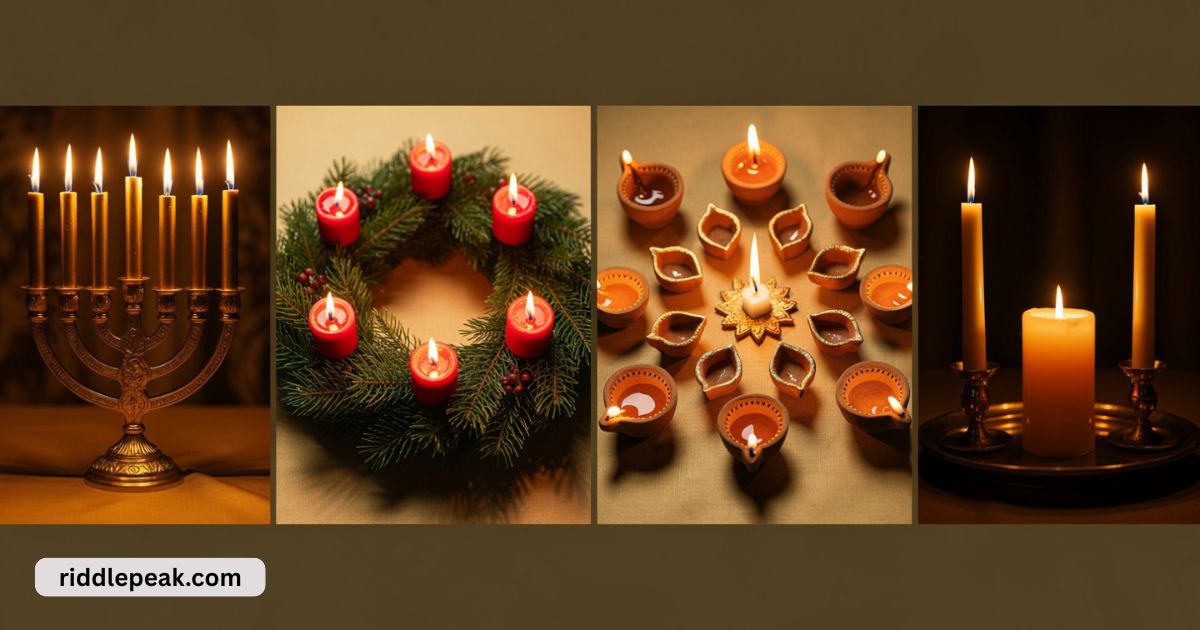
Holiday candles are among the most culturally significant and symbolically rich objects in human civilization every major world religion and cultural tradition uses candles in its celebrations, from Hanukkah’s menorah to Christmas’s Advent wreath to Diwali’s oil lamps to Buddhist prayer candles. These holiday candle riddles celebrate that global diversity while honoring each tradition’s specific meaning.
What Are Good Candle Riddles for Classroom Activities?
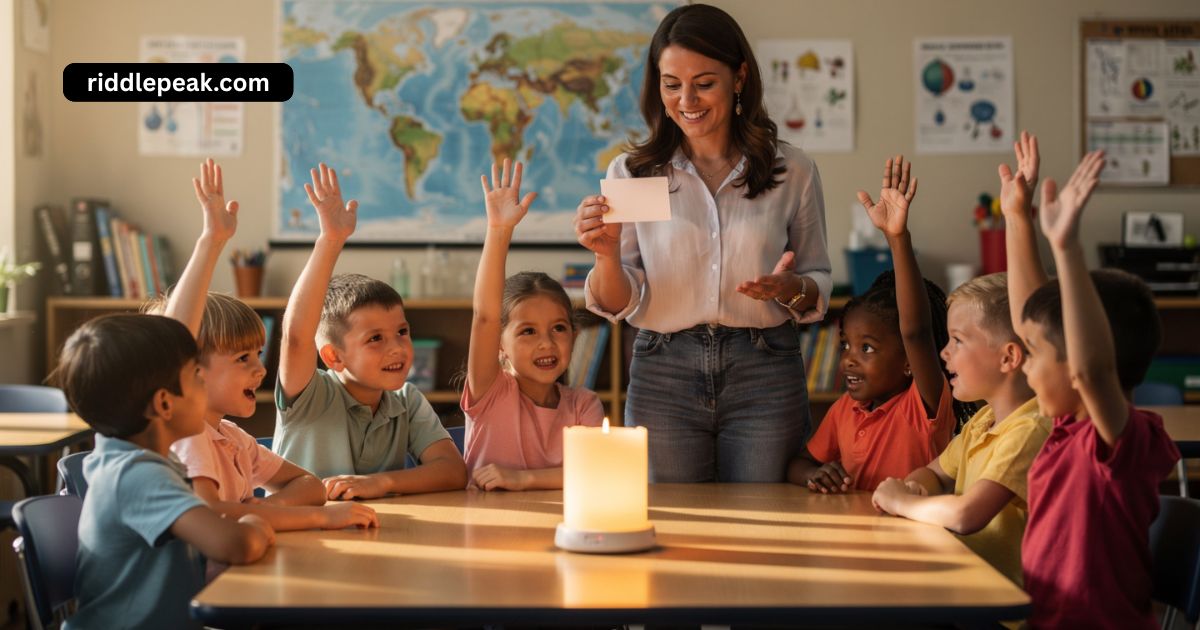
Candle riddles work in classrooms because they connect familiar household objects to curriculum content across multiple subjects simultaneously science (combustion, states of matter, wax chemistry), history (ancient civilizations, religious traditions, the invention of electric light), language arts (metaphor, idiom, personification), and math (the candle logic puzzles).
After using candle riddles as classroom warm-up activities during science units on matter and chemistry, language arts units on figurative language, and social studies units on world cultures, the engagement pattern is consistent: children who have solved a riddle about how a candle flame works retain the combustion information longer than children who only read it. The puzzle-solving process creates an emotional “click” that anchors the content in long-term memory.
Here are five specific classroom formats that work especially well with candle riddles:
Science Warm-Up: Before a unit on states of matter (solid, liquid, gas), use the “I am what a candle flame actually burns” riddle this introduces the concept that matter changes states (solid wax → liquid → vapor → combustion products) in a single object.
Language Arts Vocabulary: The pun riddles (“waxes poetic,” “burned out,” “shed light on”) introduce idiomatic language in context children who solve idiom-based riddles are more likely to use those idioms correctly in their own writing.
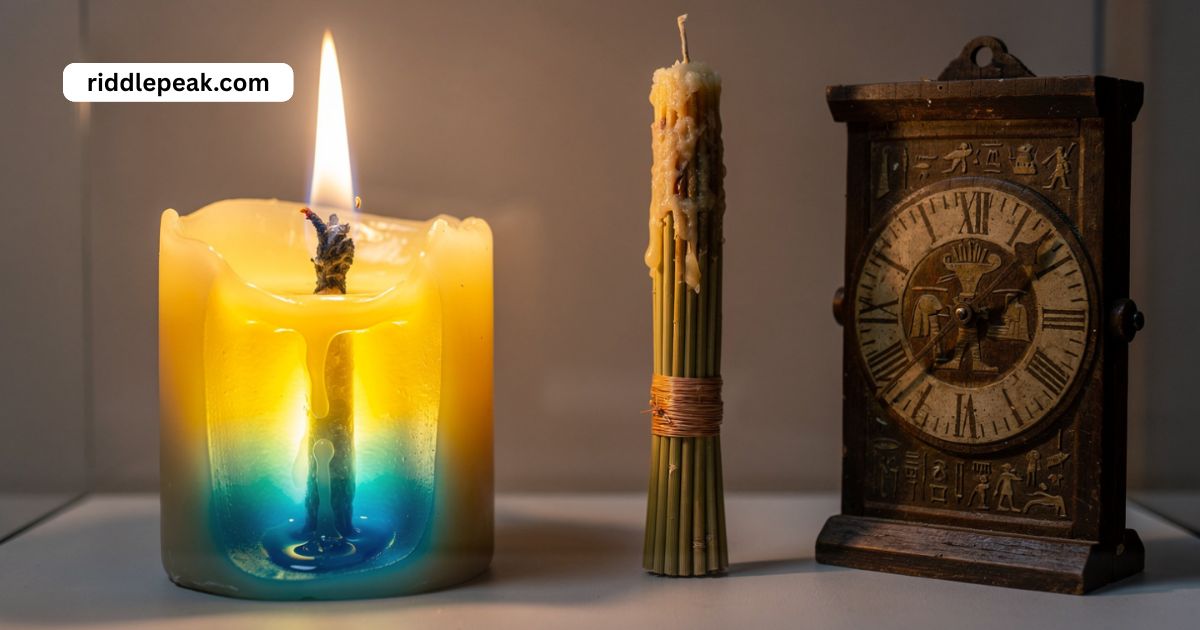
History Hook: The “I was used as a clock in medieval Europe” riddle opens a unit on pre-industrial timekeeping. The “I am the oldest candle material” riddle opens a unit on ancient civilizations.
Math Brain Teaser: The “ten candles, wind blows out three” logic puzzle works as a pre-algebra problem-solving warm-up distinguishing between what “remains” (extinguished candles) and what “burns” (lit candles) requires careful reading and logical categorization.
Cultural Appreciation: Holiday candle riddles (Hanukkah, Diwali, Advent, Havdalah) introduce religious and cultural diversity through concrete, tangible objects that children can see and sometimes experience at home.
How Do Candle Riddles Help Kids Learn?
The learning value of candle riddles operates on four distinct cognitive dimensions and all four are more powerful than traditional instruction:
Science comprehension: Candle riddles introduce genuine chemistry (wax vapor combustion), physics (capillary action in the wick), and materials science (wax types and melting points) through curiosity rather than instruction. A child who has puzzled over “What does a candle flame actually burn?” and discovered the answer (wax vapor) retains the concept because they experienced the mystery of it.
Figurative language development: English is rich with candle metaphors and idioms “burning the midnight oil,” “hiding your light under a bushel,” “burning both ends of the candle,” “the light at the end of the tunnel,” “shed light on the situation.” Children who encounter these expressions through riddles develop idiomatic fluency earlier and more naturally than through direct instruction.
Historical and cultural literacy: Candle riddles introduce children to ancient Egypt (beeswax and rushlights), medieval Europe (candle clocks and tallow candles), Jewish tradition (menorah, shamash, Havdalah), Christian tradition (Advent wreath, unity candle), Hindu/Jain/Sikh tradition (Diwali), and Buddhist tradition building a foundation of cultural awareness through familiar objects.
Mathematical reasoning: Candle logic puzzles (the “ten candles” problem, the “both ends” problem, the “hour of reading” problem) develop the kind of careful, precise reading and reasoning that is foundational to mathematical thinking. They require children to slow down, re-read, and question their initial assumptions.
Research in educational psychology supports this multi-channel learning approach. A landmark 2011 study by Kornell and Bjork in the journal Psychological Science found that interleaved problem-solving (solving varied problems from multiple angles) produced significantly better long-term learning outcomes than blocked study (studying one topic at a time). Candle riddles by approaching a single object from scientific, historical, mathematical, and humorous angles simultaneously embody this interleaved learning approach.
Candle Science Riddles Wax, Flame, and Chemistry
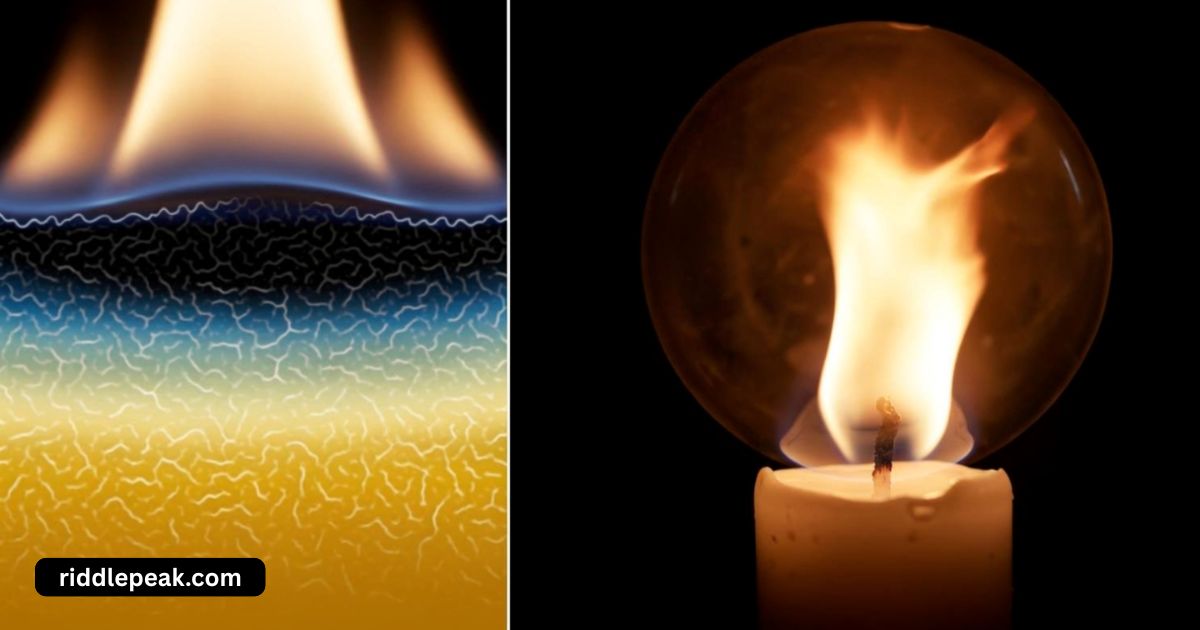
These riddles go deeper into the science of candles how they work, why they glow the colors they do, what makes different waxes different, and the fascinating physics of a candle flame. They are ideal for science classrooms, STEM programs, and curious older children who want more than just wordplay.
Candle Logic and Math Riddles
These candle-themed mathematical and logical reasoning puzzles develop the precise thinking skills that transfer directly to academic success. They are ideal for classroom math warm-ups, gifted education programs, and family game nights with children aged 8–14.
Kids can explore fun science puzzles that improve thinking skills and make learning more exciting and interactive with Science Riddles With Answers for Kids.
Candle Idiom and Symbol Riddles
English literature and everyday speech are filled with candle metaphors and these riddles teach figurative language through the familiar imagery of candlelight. They are excellent for language arts classrooms.
Easy Candle Riddles for Young Children (Ages 3–7)
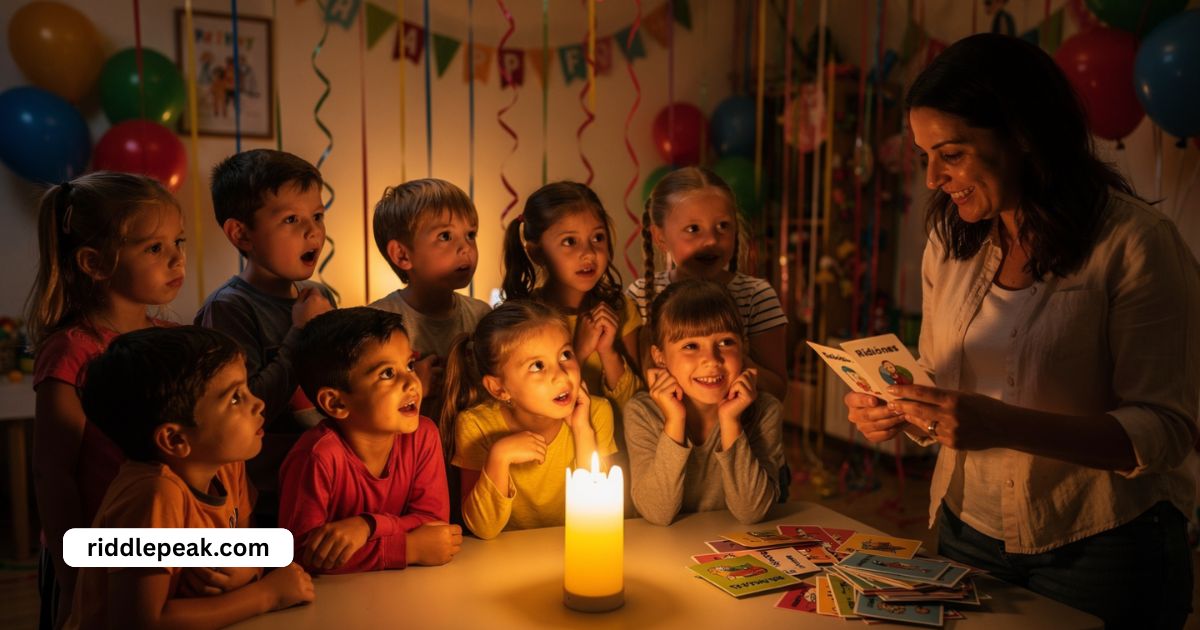
These riddles are designed for the youngest candle enthusiasts pre-K through first grade. Simple vocabulary, concrete sensory clues, and single-word answers make them perfect for read-aloud sessions, birthday party games, and holiday circle time.
Medium Candle Riddles Challenge Round (Riddles 86–120)
Hard Candle History and Culture Riddles (Riddles 96–120)
Candle Safety Riddles Learning Fire Safety Through Fun
These riddles teach genuine fire safety concepts in a child-friendly format connecting important safety knowledge to the familiar candle context.
Bonus Candle Riddles Mixed Themes (Riddles 106–150)
Final Bonus Candle Riddles (136–150)
136. Riddle: I am what happens when you hold a lit candle next to a mirror. The mirror shows my flame but the reflected flame gives no heat. What does the reflection of a candle flame demonstrate? | Answer: The reflection of light without heat (light is reflected, but the thermal infrared radiation is also reflected though the mirror doesn’t amplify the heat) | Difficulty: Hard
Conclusion
From the birthday wish to the midnight vigil, from the Hanukkah shamash to the Diwali diya, from Shakespeare’s “brief candle” to Thomas Edison’s lightbulb that finally replaced it the candle is one of humanity’s most enduring, most symbolic, and most riddle-worthy objects. These 150 original candle riddles for kids cover every dimension of this extraordinary little light-giver, with enough depth to engage toddlers blowing out their first birthday candle and enough science to challenge curious teenagers asking why the flame is teardrop-shaped.
Bookmark this page for birthday parties, holiday celebrations, classroom activities, and cozy family evenings. Share your favorite riddle in the comments especially if it stumped an adult! And when you’re ready for more, explore our Birthday Riddles for Kids and Holiday Riddles Collection to keep the light burning all year long.
FAQs
What Are Some Fun Candle Riddles For Kids?
Fun candle riddles describe a candle’s most paradoxical properties it is tall when young and short when old; it burns but is not angry; it cries but is not sad; it gives light by consuming itself. The best ones use concrete sensory details (the flickering flame, the dripping wax, the birthday wish) that children immediately recognize from their own experience. Start with easy one-clue riddles for younger children and build to multi-clue paradox riddles for ages 8 and up.
What Are Funny Candle Riddles With Answers?
Funny candle riddles use the rich double meanings in candle vocabulary: “burned out” (exhausted AND fully consumed), “lit” (a candle set on fire AND excited slang), “waxes poetic” (an idiom for exaggerating AND the literal melting of wax), “shed light on” (an idiom for explaining AND a candle literally shedding light). The best funny candle riddles connect a relatable scenario (birthday party, power outage, romantic dinner) to a surprise pun punchline.
What Are Hard Candle Riddles That Will Stump Everyone?
Hard candle riddles use candle science (wax vapor combustion, capillary action in the wick, the blue base of a complete combustion flame), candle history (the candela unit named after candles, the spermaceti candle as a 19th-century lighting standard, beeswax candles in Catholic liturgy), and candle logic (the “ten candles, wind blows out three how many remain?” puzzle). These genuinely challenge adults and older children.
What Are Birthday Candle Riddles For Kids?
Birthday candle riddles cover the numbered candles representing years of age, the birthday wish tradition (which may have origins in ancient Greece and 18th-century Germany), trick relighting candles (which use magnesium powder), and the mathematics of candle counting (binary birthday candles, how many breaths needed for how many candles). They work beautifully as party games, cake-cutting interludes, and lunchbox surprise cards.
How Do Candle Riddles Help Kids Learn?
Candle riddles teach through four cognitive channels: science (wax vapor combustion, capillary action, states of matter, wax types); figurative language (idioms like “burning both ends,” “doesn’t hold a candle to,” “shed light on”); historical and cultural literacy (ancient Egypt, medieval candle clocks, Jewish Hanukkah, Christian Advent, Hindu Diwali); and mathematical reasoning (candle logic puzzles, rate and time problems, unit cost comparisons). Research in Psychological Science (Kornell & Bjork, 2011) supports interleaved problem-solving as producing significantly better long-term learning than single-subject study.