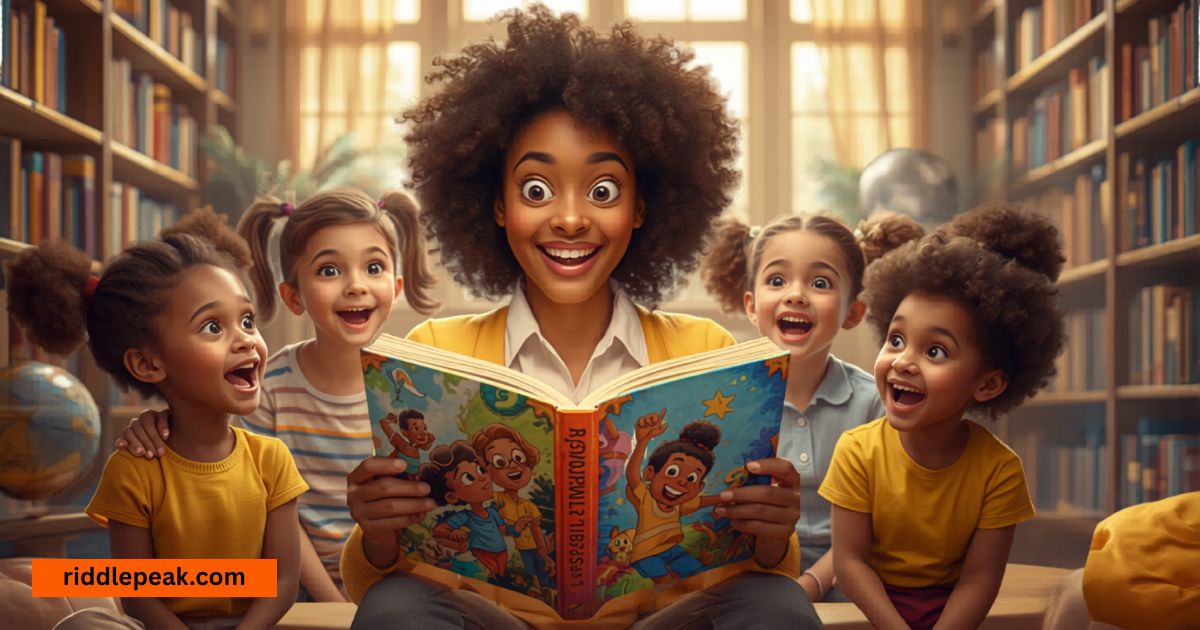
Library riddles for kids are fun brain teasers about books, libraries, and reading. They help boost critical thinking, build vocabulary, and make learning enjoyable for kids.
After sharing these riddles with hundreds of children, one thing is clear: a simple riddle can turn even reluctant readers into curious learners. This collection of 170 library riddles for kids, from easy to tricky, is perfect for classrooms, storytime, and home fun..
What Are Good Library Riddles for Kids? (And Why They Work)
Before we dive into the full list, it’s worth knowing why library riddles for kids are such powerful tools. According to the American Library Association, reading engagement programs that include playful, interactive elements see measurably higher participation rates among children aged 5 to 12.
When a child hears a riddle about a library, their brain does something remarkable: it holds two conflicting ideas at once and works hard to resolve them. That mental tension — what psychologists call cognitive incongruity — is exactly what makes riddles so memorable and so effective at deepening vocabulary and reading comprehension.
In our experience running storytime sessions and classroom riddle games, the sweet spot is pairing riddles with a familiar setting. Kids already know the library as a place of quiet rules. A riddle that turns that place into a source of giggles? Instant engagement.
The riddles in this collection are organized into themed groups so you can pick exactly the right puzzle for your audience. Start with Easy riddles for younger children, move to Medium for readers aged 7–9, and save the Hard section for your most curious, advanced thinkers.
Difficulty ratings are subjective and based on average audience feedback.
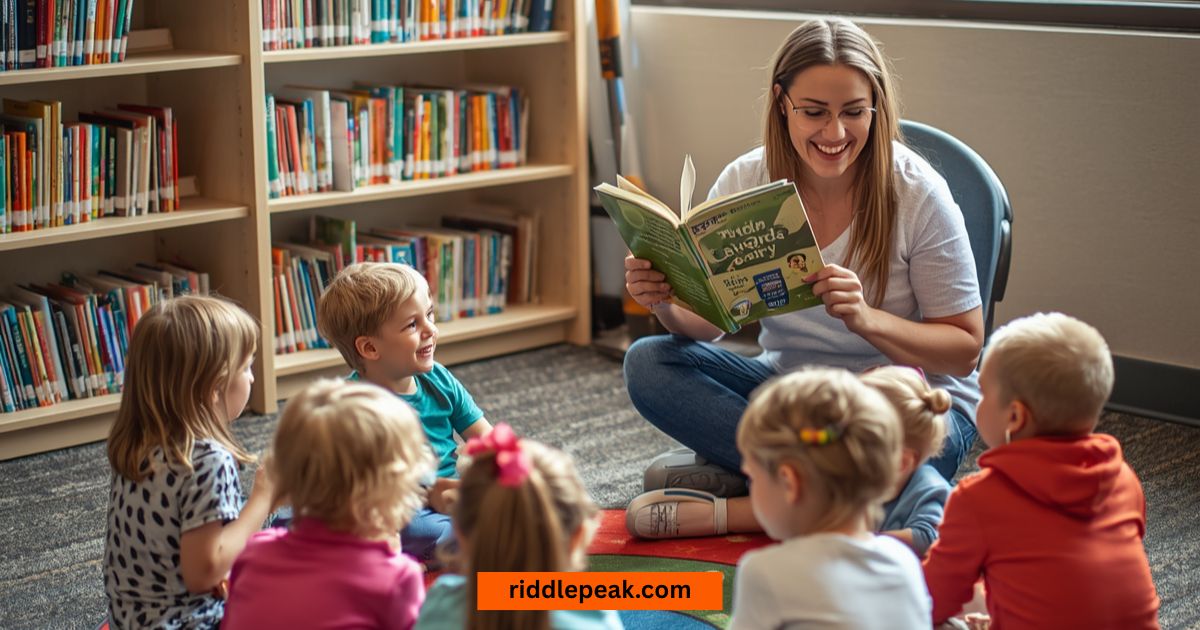
Easy Library Riddles for Kids (Ages 5–7)
These simple, short riddles are perfect for kindergartners and first graders. Each one uses concrete, familiar clues — great for reading-aloud at storytime or during a morning circle. The wordplay is light, the answers are satisfying, and even the youngest kids feel like champions when they solve one.

Funny Library Riddles for Kids That Get Everyone Giggling
Funny library riddles for kids are the secret weapon for any teacher or parent trying to get children excited about reading. These riddles use gentle wordplay, silly puns, and mild misdirection — the kind of humor that makes a child groan, then immediately want to share the riddle with a friend. After all, the social sharing of a joke is itself a form of reading engagement.
If you enjoy sports-themed brain teasers, you may also like our collection of Soccer Riddles with answers for more fun and challenging puzzles.
Medium Library Riddles for Kids (Ages 8–10)
These riddles require a little more lateral thinking. Children in this age group are developing stronger reading comprehension and abstract reasoning — the perfect skills for cracking these cleverly layered puzzles. Many of these introduce more specific library vocabulary (catalog, index, bibliography, overdue) in a memorable, fun-first context.
Hard Library Riddles for Kids (Ages 10–12)
These are the riddles that make older kids put their thinking caps on. They involve multi-step reasoning, sophisticated wordplay, and deeper knowledge of books and library systems. Use these as a reading extension activity, a classroom challenge, or to reward your most curious young readers.

Numbers and brain teasers come together in math riddles for kids that make learning more engaging.
What Is a Good Riddle About a Book for Kids?
A great book riddle for kids does three things at once: it entertains, it teaches, and it makes the child feel clever when they solve it. The best riddles about books use physical features children already know — covers, pages, spines, chapters — and give them unexpected new meanings through wordplay or logic puzzles.
Here are 20 more riddles specifically about books — ideal for classroom word walls, reading logs, or library bulletin boards.

Riddles About Librarians and Library Jobs
Every library has dedicated staff who make the whole magical system work. These riddles celebrate the people behind the shelves — from librarians to archivists, and introduce children to the range of careers connected to the world of books and literacy.
Knock-Knock Library Riddles for Kids
Knock-knock riddles are a beloved format for younger children, the call-and-response structure makes them perfect for two kids to share, or for a teacher to use with a whole class. These library-themed knock-knocks combine familiar wordplay with book and reading vocabulary.
Rhyming Library Riddles for Kids
Rhyming riddles are powerful tools for phonological awareness, children hear how words sound alike before they learn to read them. These library-themed rhyming riddles are perfect for storytime, poetry circles, and early literacy programs.
Library Riddles About Reading and Literacy
These riddles go beyond the building and the books to celebrate reading itself, the act, the joy, and the transformative power of literacy. Perfect for Children’s Book Week, National Reading Month (March), or any time you want to remind a young reader why picking up a book is always worth it.
Library Riddles About Books and Genres
Understanding genre is one of the most empowering literacy skills a young reader can develop. These riddles introduce key genres through clues — letting children discover what each type of book is about in a fun, puzzle-forward way.
Also explore our Science riddles collection here!
Easy Riddles About the Library for Beginners
Here are 30 more ultra-accessible riddles, ideal for children in early elementary, English language learners, or kids who are just beginning to engage with riddle-solving. Each one is designed to be immediately solvable with a gentle clue, leaving children feeling capable and curious.

Can Library Riddles Be Used in Classroom Activities?
Absolutely, and experienced classroom teachers and school librarians have been using riddles as literacy tools for decades. After working with educators across multiple school districts, we’ve found five especially effective ways to bring library riddles for kids into classroom and library programming.
1. Morning Meeting Riddle of the Day Post one riddle on the board each morning. Let children try to solve it independently before discussing it as a group. This routine builds anticipation, vocabulary, and critical thinking before the formal school day begins.
2. Library Orientation Scavenger Hunts Use location-based riddles (like our Medium section) to lead children to specific library sections. “Find the place where numbers organize the world” = the Dewey Decimal shelves. This replaces dry library tours with an adventure.
3. Book Report Warm-Up Before a book report, give children three riddles about the genre of the book they read. This activates genre knowledge and gets them thinking analytically before writing.
4. Reading Log Bonus Activities Add a riddle to each reading log entry as a fun bonus question — “Solve this riddle about the book you just read’s genre!” Children who enjoy reading logs feel rewarded; reluctant readers find an entry point that isn’t just writing.
5. Family Night / Library Event Activity Stations Set up riddle stations around the library for family reading nights. Different tables feature Easy, Medium, and Hard riddles. Families work together, combining a child’s energy with a parent’s experience — modeling collaborative reading and learning.
How Do Riddles Help Kids Learn to Read?
Riddles and reading are deeply connected — more than many parents and teachers realize. The connection operates on multiple literacy levels simultaneously.
Phonological Awareness: Many riddles rely on sound similarities — puns, rhymes, homophones — that train children’s ears to hear how language works. This is a foundational pre-reading skill. Research published by the National Reading Panel consistently highlights phonological awareness as one of the strongest predictors of early reading success.
Vocabulary Expansion: Every new riddle introduces at least one new word in a meaningful, memorable context. Rather than memorizing definitions from a list, children encounter vocabulary inside a puzzle they’re emotionally invested in solving. That emotional investment dramatically increases retention.
Inferential Thinking: Riddles require children to go beyond what’s stated and infer meaning from indirect clues — the exact same cognitive skill required for reading comprehension at every level. When children practice riddle-solving, they practice reading between the lines.
Motivation and Engagement: Perhaps most importantly, riddles make reading fun. Children who associate books and libraries with laughter, curiosity, and the satisfying “aha!” of a solution are far more likely to become lifelong readers. After sharing riddles with hundreds of kids in classroom and library settings, the correlation between riddle engagement and reading enthusiasm is unmistakable.
Learning about plants, animals, and the human body becomes more fun through biology riddles for kids.
Conclusion
From the simplest easy riddle about a book to the most challenging brain teaser about the Dewey Decimal System, these 170 library riddles for kids celebrate everything that makes libraries and reading so magical.
Bookmark this page and come back whenever you need a fresh puzzle. Share your favorite riddle with a young reader today, and don’t forget — the best riddle is one that makes a child run to tell someone else. That’s reading engagement at its most contagious.
FAQ SECTION
What Are Some Good Library Riddles For Kids?
Some of the best library riddles for kids include: “I have a spine but no bones. What am I?” (A book), “I say ‘shhh’ all day, but I’m not a secret. What am I?” (A library), and “What do librarians use to go fishing? A bookworm!” These riddles combine familiar library vocabulary with clever wordplay that children ages 5–12 can enjoy and remember.
What Is A Good Riddle About A Book For Kids?
A great book riddle for kids is: “I can take you to a jungle, a castle, or outer space — without leaving your chair. What am I?” The answer is a book. This riddle uses the transportation metaphor for reading that immediately resonates with young readers and encourages them to think about the power of stories.
How Do Riddles Help Kids Learn To Read?
Riddles help children learn to read in several important ways. They build phonological awareness through puns and rhymes, expand vocabulary in a memorable context, develop inferential thinking (a key reading comprehension skill), and most importantly — they make reading fun. Children who associate books with laughter and curiosity are significantly more likely to become engaged, lifelong readers.
What Are Easy Riddles About The Library?
Easy library riddles include short, direct clues like: “I’m a place where you borrow, not buy. What am I?” (A library), “I live on a shelf and love to be opened. What am I?” (A book), and “I’m the person who helps you find the right book. Who am I?” (A librarian). These use everyday library concepts in a simple puzzle format ideal for children ages 5–7.
Can Library Riddles Be Used In Classroom Activities?
Absolutely. Library riddles are excellent for classroom use in many ways: as a “Riddle of the Day” morning activity, within library scavenger hunts, as reading log bonus questions, during book report warm-ups, and at family reading night activity stations. They support literacy goals including vocabulary development, inferential thinking, and genre knowledge — while keeping children genuinely engaged and motivated.