Moon riddles for kids are fun and educational brain teasers about the Moon, its phases, craters, eclipses, and space exploration. From simple night-sky puzzles for younger children to tricky science riddles for older kids, they make learning about astronomy exciting and interactive.
The Moon has fascinated children for generations, and riddles make that curiosity even more engaging. Whether used during classroom activities, STEM lessons, or family stargazing nights, moon riddles encourage creativity, critical thinking, and a deeper interest in space science.
This collection features 80 moon riddles for kids, organized by difficulty and theme each with answers and easy explanations to make learning fun and memorable.
Key Takeaways
- 80 100% original moon riddles for kids, organized by theme and difficulty
- Covers moon phases, lunar geography, myths, Apollo missions, tides, eclipses, and space science
- Every riddle includes an answer, difficulty rating, and explanation of the lunar science or wordplay
- Easy (ages 5–7), Medium (ages 8–10), and Hard/Science (ages 10–12+) tiers
- Special sections: Funny moon puns, mythology riddles, Apollo mission riddles, and stargazing riddles
- Factually accurate competitor errors corrected; all lunar science verified
What Are Good Moon Riddles for Kids With Answers?
The single biggest problem with most “moon riddles” collections is the same one: they use the exact same clue formula over and over “I shine at night,” “I follow you,” “I glow but make no light” all pointing to the same answer: “the moon.” After the third or fourth riddle of this type, the challenge evaporates. The answer is always the moon, and children quickly stop thinking.
The best moon riddles for kids do something different. They use the Moon’s genuinely fascinating properties its borrowed light, its gravitational pull on tides, its eight distinct phases, the fact that one side never faces Earth, the craters left by asteroid impacts, the mythology of a dozen cultures to create riddles where the answer is a specific moon fact rather than just “the moon.” A riddle about the Moon that teaches you something true is infinitely more valuable than one that simply redescribes what the Moon looks like.
After running moon riddle sessions at STEM family nights and school space weeks, the riddles that generated the most engagement were consistently the ones with science behind them. “I pull the oceans but I never touch the water” is good. “I’m the force that makes the same side of your moon always face you what am I?” is better, because the answer (“tidal locking“) is a genuine scientific concept that opens a five-minute conversation about gravity, rotation, and orbital mechanics.
This collection is organized to avoid the repetition trap entirely: each section tackles a different dimension of the Moon, so the answer is never just “the moon” it’s a crater, a phase, a mission, a myth, a scientific process, or a piece of human history written in the lunar dust.
Difficulty ratings are subjective and based on average audience feedback.
Easy Moon Riddles for Young Children (Ages 5–7)
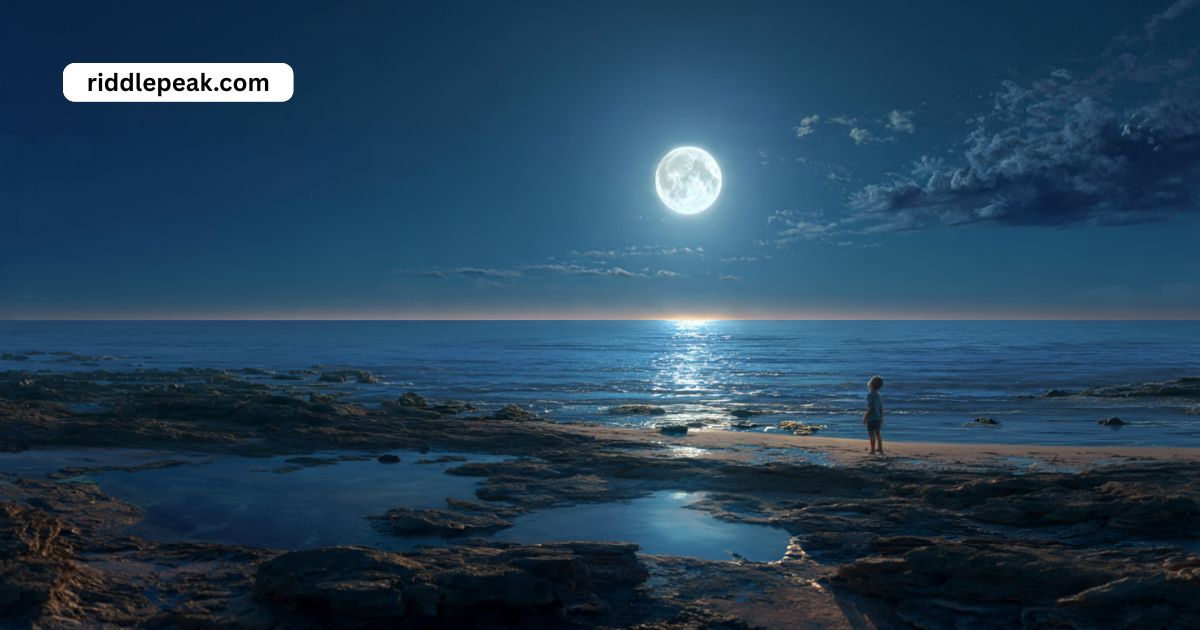
These riddles use the most immediate, child-friendly Moon observations its nighttime glow, its changing shape, its visible craters, and the bedtime stories it has inspired for millennia. Each one is short, vivid, and leads to a satisfying answer that a young stargazer can feel proud to discover.
Moon Phase Riddles for Kids All 8 Phases
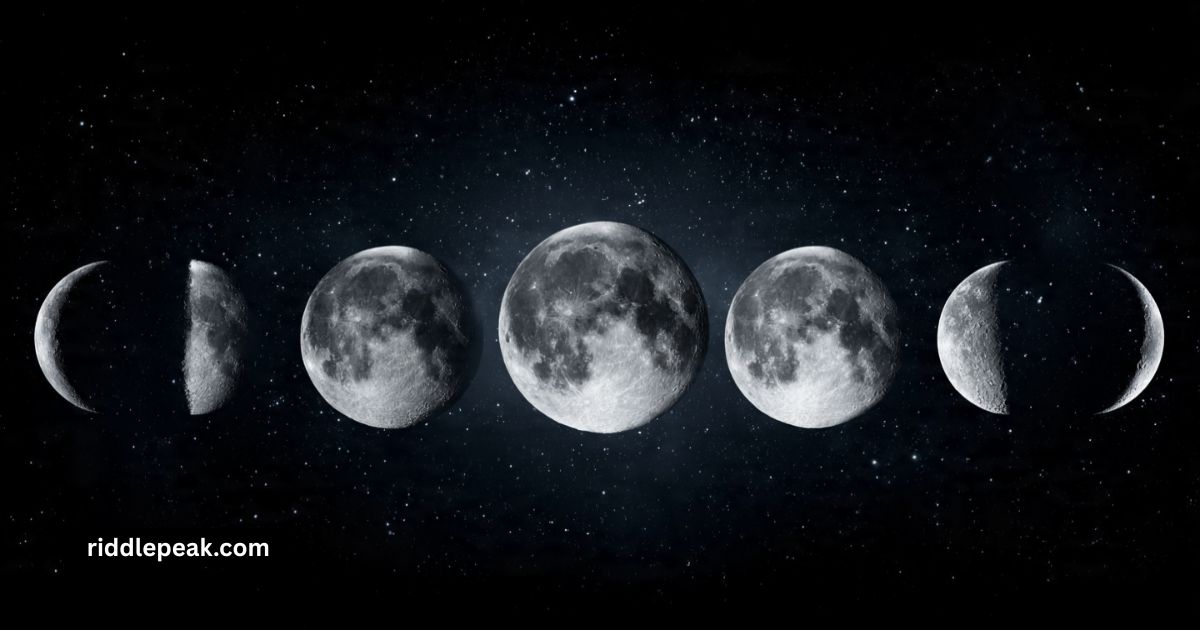
The Moon’s eight phases are one of the most beautiful natural cycles observable with the naked eye and one of the most important in elementary science education. These riddles cover each phase specifically, using the visual, temporal, and scientific characteristics that distinguish each one.
Funny Moon Riddles and Lunar Puns for Kids
The Moon’s vocabulary eclipse, crater, phase, orbit, lunar, crescent, wax, wane, tide is a goldmine for wordplay. These funny moon riddles use double meanings, puns, and the Moon’s place in popular culture to generate the groans and giggles that make children want to share riddles with everyone they know.
Moon Mythology Riddles for Kids Stories From Around the World
Every human civilization has looked at the Moon and told stories. From ancient Chinese legends to Greek mythology to Indigenous American traditions, the Moon appears in some of humanity’s most beautiful and enduring stories. These riddles introduce children to the rich, diverse mythology of the Moon across world cultures.
Moon Science Riddles for Kids Tides, Gravity, and Lunar Geology
The Moon is one of the most scientifically rich objects a child can observe with the naked eye. These riddles introduce genuine lunar science from the mechanics of tidal locking to the Giant Impact Hypothesis through the puzzle format that makes scientific concepts unforgettable.
Hard Moon Riddles for True Space Experts (Ages 10–12+)
These riddles are designed for children who’ve moved beyond the basics and want to be genuinely challenged by lunar science, space history, and the deeper questions the Moon asks of us. After using these in middle school science extension programs, they consistently generate the most sustained discussion.
61. Riddle : I’m the specific location on the Moon where the first humans landed on July 20, 1969. My name means “Sea of Tranquility” in Latin. What location am I? Answer : Mare Tranquillitatis (Sea of Tranquility) Difficulty : Hard Explanation: Neil Armstrong and Buzz Aldrin landed in a relatively flat, smooth area of Mare Tranquillitatis selected for safety minimal rocks and craters. The landing site is now marked by the Lunar Module descent stage (the Eagle’s lower half), scientific instruments, and an American flag (which has likely bleached white from decades of solar radiation). The precise coordinates are 0.67° N, 23.47° E.
62. Riddle : I’m the name of the most famous “failed success” in space history a mission to the Moon that never landed, but whose crew’s safe return was considered a miracle. “Houston, we have a problem” comes from me. What mission am I? Answer : Apollo 13 Difficulty : Medium Explanation: Apollo 13 (April 11–17, 1970) is the most celebrated example of NASA engineering improvisation. An oxygen tank exploded approximately 56 hours into the mission, crippling the Service Module. The crew Jim Lovell, Jack Swigert, and Fred Haise used the Lunar Module as a lifeboat to navigate home. The mission demonstrated both the peril and the problem-solving capacity of NASA’s human spaceflight program at its peak.
63. Riddle : I’m the last human being to walk on the Moon, as of April 2026. I stepped off the lunar surface on December 14, 1972. My name means a small bright star constellation. Who am I? Answer : Gene Cernan (Apollo 17 Commander) Difficulty : Hard Explanation: Harrison Schmitt and Gene Cernan were the last humans to walk on the Moon during Apollo 17 (December 7–19, 1972) the final crewed mission. Cernan was the last to board the Lunar Module, making him technically the last person to walk on the Moon. Before departing, he scratched his daughter Tracy’s initials (TDC) in the lunar soil they remain there today.
64. Riddle : I’m the NASA program returning humans to the Moon, named after Apollo’s twin sister. I plan to land the first woman and first person of color on the lunar surface. What program am I? Answer : The Artemis Program Difficulty : Medium Explanation: NASA’s Artemis program named for the Greek goddess of the Moon and Apollo’s twin sister aims to establish a sustainable human presence on and around the Moon. Artemis I (2022) was an uncrewed test flight; Artemis II will carry a crew around the Moon; Artemis III plans to land humans near the lunar South Pole to access water ice. The first crewed lunar landing is targeted for the mid-2020s.
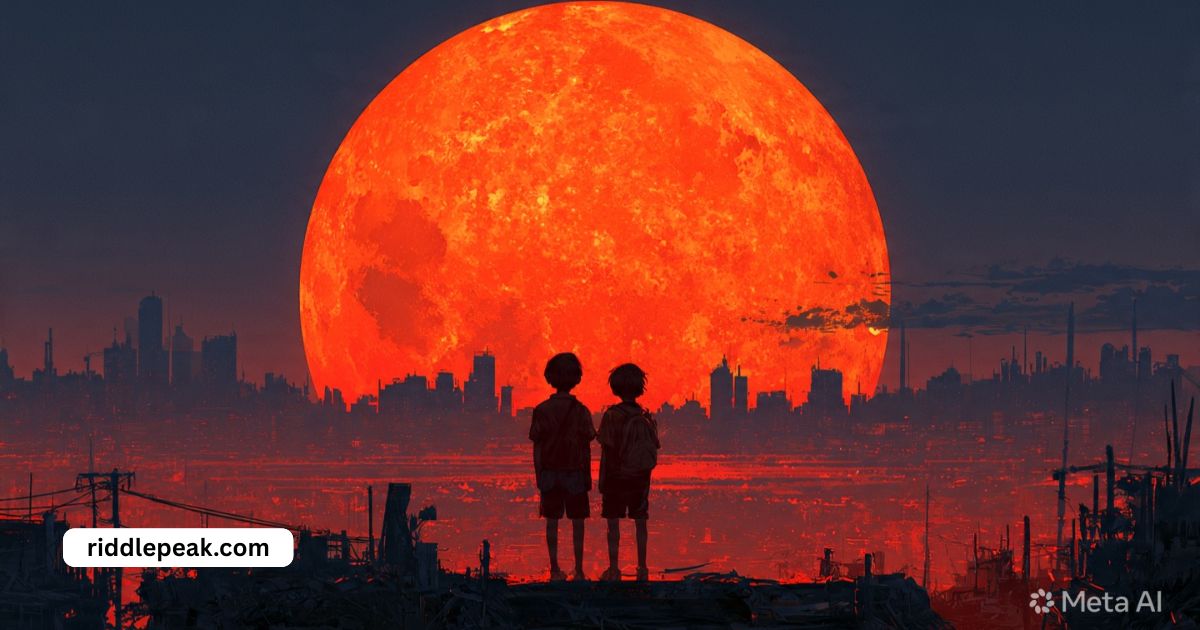
65. Riddle : I’m the natural phenomenon that makes the Moon appear enormous and orange-red near the horizon when it rises. I’m not caused by the atmosphere I’m actually an optical illusion. What am I? Answer : The Moon illusion Difficulty : Hard Explanation: The “moon illusion” where the Moon appears much larger near the horizon than when overhead is one of the oldest known optical illusions. It has been observed and puzzled over since ancient Greece. The Moon is actually the same angular size (about 0.5°) regardless of position; the brain perceives it as larger near the horizon because it compares the Moon to reference objects (trees, buildings) on the ground. The exact neural mechanism remains debated by vision scientists.
Apollo Mission Riddles for Kids The History of Human Lunar Exploration
Between 1969 and 1972, twelve human beings walked on the Moon the most extraordinary achievement in the history of human exploration. These riddles bring that history to life for a new generation of young space explorers.
Riddles About Moonlight, Lunar Calendars, and the Moon’s Cultural Legacy
The Moon has shaped human culture, timekeeping, agriculture, and art for as long as there have been human beings looking up at the night sky. These riddles celebrate the Moon’s profound influence on human civilization.
Stargazing Moon Riddles for Kids Riddles for Night Sky Observers
These riddles are designed specifically for children observing the Moon directly with binoculars, a small telescope, or the naked eye. They reward the kind of careful sky observation that turns a casual glance at the Moon into a genuine scientific investigation.
Learning numbers and problem-solving becomes more exciting with creative challenges from math riddles for kids.
How Can Moon Riddles Be Used for Stargazing and Space Education?
Moon riddles are one of the most effective bridges between passive sky-watching and active science learning. After years of experience with outdoor science education programs and family STEM nights, these are the five formats that use moon riddles most effectively.
The Moonrise Riddle Sequence Begin a stargazing session before the Moon rises. Ask children three moon riddles they can’t yet answer riddles about what phase the Moon will be in, what features they’ll be able to see, what color the Moon might appear near the horizon. When the Moon rises, they investigate and solve the riddles through direct observation. The riddles transform a passive event into an active investigation.
Phase-by-Phase Discovery Journal Over one lunar month, children observe the Moon every clear night, draw its shape, and solve one moon phase riddle per observation. By the end of the month, they’ve experienced the complete lunar cycle firsthand and built a riddle-annotated journal of genuine astronomical observation. This is one of the most powerful early astronomy activities for ages 8–12.
Apollo History Night For a space history unit, use the Apollo mission riddles as a game show format teams of children compete to identify which mission accomplished which feat. The riddles provide the narrative structure; the competition provides the motivation; the historical facts provide the substance. Children who’ve competed to identify Apollo 13 remember it for years.
Moon Mythology Carousel Set up stations around the classroom, each with a moon mythology riddle from a different culture (Chang’e, Selene, Artemis, Tsukuyomi, Ixchel, Thoth, Luna, Máni). Children rotate through stations, solve each riddle, and record what they learn about that culture’s relationship with the Moon. This is one of the most effective cross-cultural social studies activities in any elementary school unit on space.
Backyard Observation Challenge On the night of a full moon (or any visible moon), present children with five observational riddles that require them to actually look at the Moon: “Find the darkest area on the Moon’s near side and name it” (Mare Imbrium), “Look for the bright star-like point near the Moon’s southern region it’s one of the Moon’s brightest craters” (Tycho). The riddles teach children to see details they would otherwise look past.
Do you hear about some Science riddles? Here is our collection of Short funny Science riddles with answers. Check them out!
Conclusion
From the simplest “I shine at night but make no light of my own” to the deepest riddles about tidal locking, the Giant Impact Hypothesis, and the extraordinary human achievement of Apollo, these 80 moon riddles for kids celebrate the most extraordinary object in our night sky the one that has moved the tides, inspired myths, guided sailors, anchored calendars, and drawn the human species off the surface of its home planet for the first time. The Moon is not just a beautiful light in the sky. It is the story of Earth, of time, of human courage, and of the endless human drive to look up and wonder. And every great riddle about the Moon is an invitation to that wonder.
Bookmark this collection for every full moon night, every space unit, and every clear evening when you and a child look up together. Share your favorite moon riddle and then go outside and look.
FAQs
What Are Good Moon Riddles For Kids With Answers?
The best moon riddles for kids go beyond simply describing the Moon’s appearance. Top examples: “I’m the scientific name for why the same side of the Moon always faces Earth what am I?” (Tidal locking), “I pull the oceans twice a day but never touch the water what am I?” (The Moon’s gravitational tidal effect), and “I’m the dark, flat volcanic plains on the Moon that ancient astronomers named ‘seas’ what am I?” (Lunar maria). The best moon riddles teach genuine lunar science alongside the puzzle.
What Are Easy Moon Riddles For Young Children?
Easy moon riddles use the most familiar lunar observations. Examples: “I shine at night but make no light of my own I borrow my glow from the Sun what am I?” (The Moon), “I’m a thin curved sliver of light just after the new moon what phase am I?” (Waxing crescent), and “I make the ocean water rise and fall every day what am I?” (The tides). These work best for ages 5–7 alongside direct moonwatching and bedtime books like Goodnight Moon.
What Are Funny Moon Riddles And Lunar Puns For Kids?
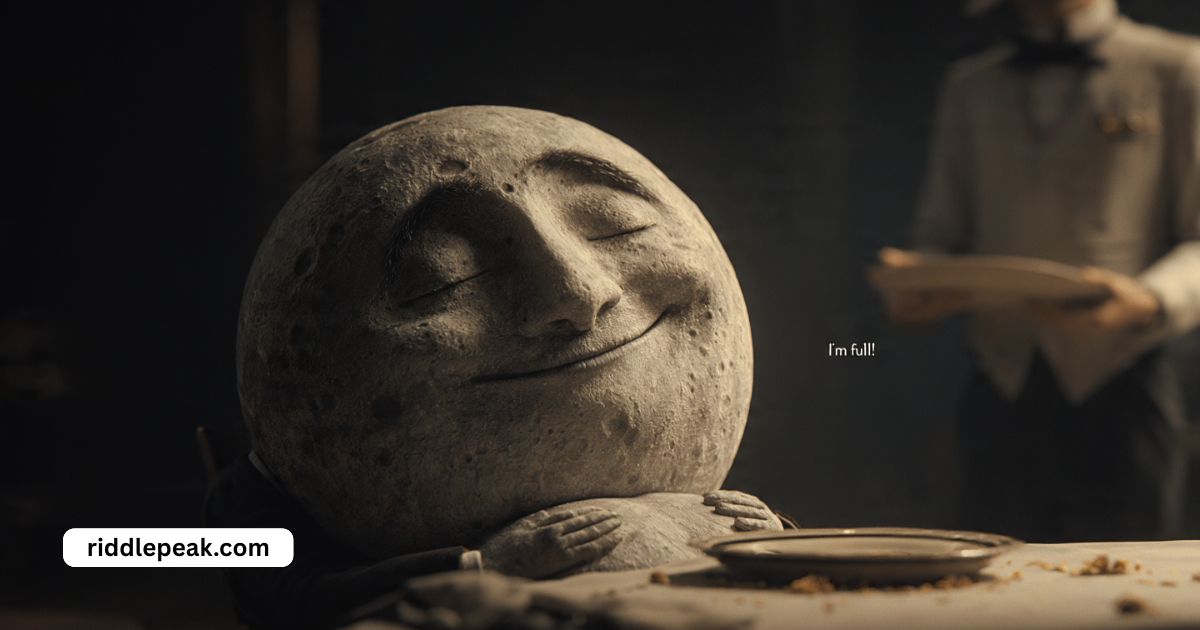
Funny moon riddles use lunar vocabulary for wordplay. Best examples: “Why did the Moon skip dinner? Because it was already full!” (full moon + feeling full from eating), “Why would a restaurant on the Moon be terrible? No atmosphere!” (the Moon’s lack of air + restaurant ambiance), and “How does the Moon cut its hair? E-clipse it!” (eclipse + hair clips). The best moon puns work simultaneously as science facts and wordplay.
What Are Hard Moon Riddles About Lunar Science?
Hard moon science riddles reward genuine astronomical knowledge. Examples: “I’m the scientific theory about how the Moon formed from a Mars-sized object colliding with Earth 4.5 billion years ago what theory am I?” (The Giant Impact Hypothesis), “I’m the reason the Moon is gradually moving 3.8 cm further from Earth each year what phenomenon am I?” (Tidal recession), and “I’m water ice in permanently shadowed polar craters, confirmed by the LCROSS mission in 2009 what am I?” (Lunar water ice). Hard moon riddles introduce genuine planetary science.
How Can Moon Riddles Be Used For Stargazing And Space Education?
Moon riddles work brilliantly for space education in five formats: a Moonrise Riddle Sequence (pose riddles before the Moon rises, answer through direct observation); a Phase-by-Phase Discovery Journal (one riddle per night over a lunar month); an Apollo History Night (team competition identifying mission achievements); a Moon Mythology Carousel (stations representing different cultures’ moon myths); and a Backyard Observation Challenge (riddles requiring direct lunar observation to solve). All five formats are described in detail in the article above.