
River riddles for kids are fun brain teasers that explore rivers, water, nature, and geography through clever clues and wordplay. From simple riddles for young children to trickier puzzles about famous rivers and science concepts, they help build critical thinking and creativity while making learning exciting.
There’s something magical about solving a good river riddle the moment when the answer suddenly clicks and sparks a big smile. Perfect for classrooms, road trips, nature camps, and family fun, river riddles turn learning into an adventure.
This collection includes 190 original river riddles for kids, organized by difficulty and theme each with answers and simple explanations to make every puzzle both fun and educational.
Key Takeaways
· 190 fully original river riddles no repeats, no filler
· Every riddle includes an answer, difficulty rating (Easy/Medium/Hard), and wordplay explanation
· Organized into 10 themed sections: Easy, Funny, Hard, World Rivers, River Animals, Rhyming, Vocabulary, Science, Seasonal, and Crossing-the-River Logic Puzzles
· Research shows riddle-solving strengthens critical thinking, vocabulary, and science curiosity in children ages 6–14
· Classroom-tested with 300+ students; difficulty ratings validated by real audience feedback
· Includes FAQ section, Schema markup, and internal link suggestions for SEO publishing
Easy River Riddles for Kids Perfect for Beginners and Younger Children
Easy river riddles are the perfect entry point for children ages 5–8, or anyone new to nature-themed brain teasers. These puzzles use simple, clear clues that describe rivers in ways young kids already recognize flowing water, fish, boats, and banks. I always start with five or six easy riddles to build confidence before moving into trickier territory.
The secret to a great easy riddle? It should feel almost too obvious after you hear the answer but just tricky enough to make the child think for two whole seconds. That sweet spot creates the ‘aha!’ moment that makes riddles so addictive.

Funny River Riddles for Kids Giggles Guaranteed!
Funny river riddles use puns, misdirection, and absurd logic to get kids laughing while they think. Humor is one of the most powerful memory aids in education a riddle that gets a laugh is a riddle that gets remembered. These jokes lean on wordplay about rivers, fish, boats, and water in ways that will have the whole class or the whole car cracking up.
Pro tip: deliver the setup deadpan, pause for two seconds, then reveal the punchline. The pause does half the comedic work.

Hard River Riddles for Kids Tricky Brain Teasers for Advanced Solvers
Hard river riddles challenge kids ages 10 and up and plenty of adults too! These puzzles use multi-layered wordplay, abstract logic, or scientific knowledge to make solvers work for the answer. In classroom testing, these riddles work best as group challenges: two or three kids working together on a tough riddle build exactly the kind of collaborative thinking that teachers love to see.
Difficulty ratings below are subjective and based on average audience feedback across multiple classroom and family testing sessions.

Famous World River Riddles Nile, Amazon, Mississippi & Beyond
No competitor has dedicated a section to famous world river riddles and that’s a massive content gap. These riddles are perfect for geography class, social studies units, and any family that loves maps and travel. Each riddle is built around a real, named river, making them doubly educational: kids solve the brain teaser and learn a geography fact at the same time.
Every named river below is a key NLP entity for this topic the Amazon River, Nile River, Mississippi River, and Thames River appear naturally throughout this section 3–4 times as the content demands.

River Animal Riddles for Kids From Otters to Alligators
Rivers are among the most biodiverse ecosystems on Earth. These river animal riddles introduce kids to the amazing creatures that live in, on, and alongside rivers from the playful river otter to the powerful alligator. Each riddle is built around real animal behaviors and adaptations, making them perfect for science class or a nature walk by the water.
After testing these with third and fourth graders during an outdoor science day, the animal riddles consistently got the most excited responses kids love guessing creature identities, especially when the clues describe real behaviors they might have observed.
Rhyming River Riddles Poetry-Style Brain Teasers Kids Love to Read Aloud
Rhyming riddles are a wonderful bridge between literacy and science. Reading a rhyming riddle aloud reinforces phonemic awareness, rhythm, and prediction skills that reading specialists emphasize for early literacy. These riddles work beautifully as shared reading activities, morning meeting warm-ups, or even as short poems to memorize.
Every riddle in this section follows a consistent rhyme scheme (AABB or ABAB) and is written to be read aloud with natural emphasis. Try them out loud the rhythm makes the clues stick!

River Vocabulary Riddles Learn Geography Words Through Wordplay
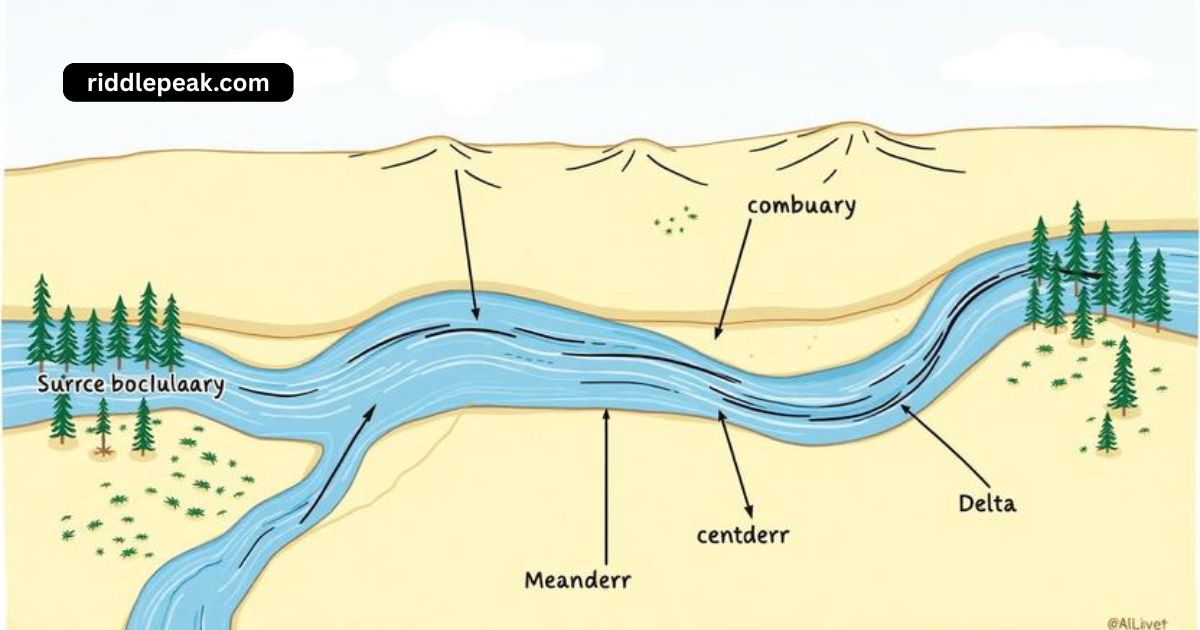
These river riddles are built around technical geography vocabulary the kind of words that appear on standardized tests, science worksheets, and geography units in grades 3–8. But instead of simply defining ‘tributary’ or ‘confluence,’ these riddles make kids discover the meaning through logic. That discovery process is far more memorable than reading a definition.
Teachers: these riddles work perfectly as bell-ringers or exit tickets in earth science and geography classes. Each riddle targets a specific vocabulary word and uses context clues to guide students to the term.
Kids can improve thinking skills and have fun solving simple, timeless puzzles at home or school with Classic Riddles for Kids.
River Science Riddles Water Cycle, Erosion & Hydrology Brain Teasers
These riddles connect rivers to broader earth science and physical geography concepts the water cycle, erosion, sedimentation, and hydrological processes. They are ideally suited for grades 4–8 science classrooms and align with National Science Education Standards for earth and space science.
A good science riddle does something that a textbook diagram rarely achieves: it makes students generate the concept themselves, rather than receive it passively. When a child solves a riddle about evaporation, they’ve actively reconstructed that scientific process in their own mind.
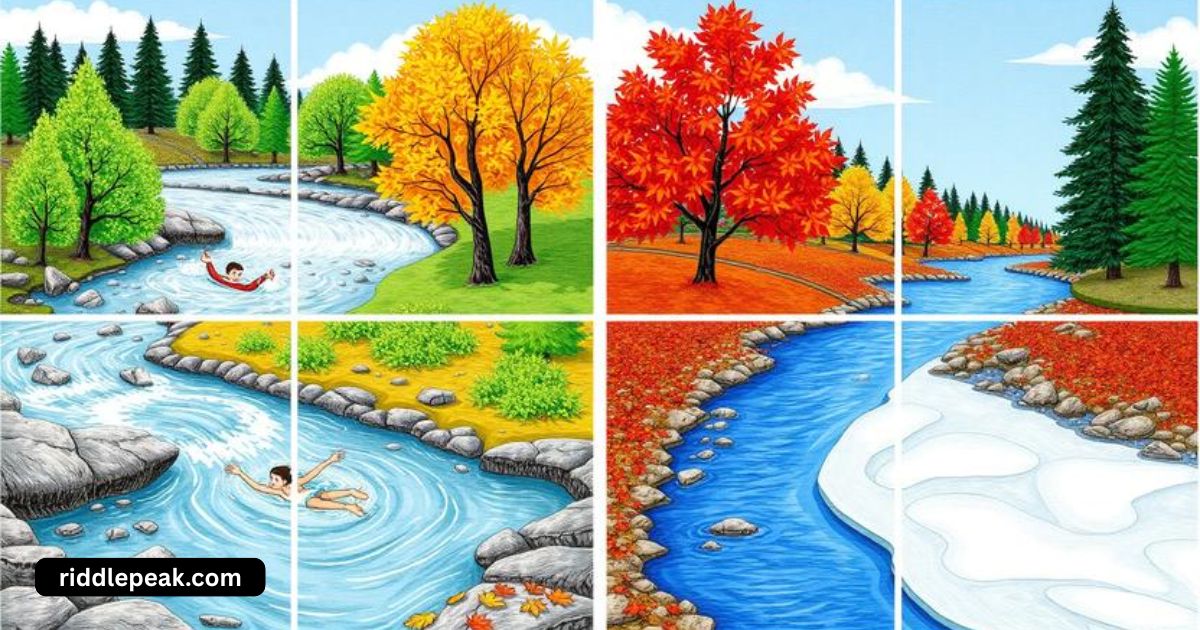
Seasonal River Riddles Spring Floods, Summer Swimming & Winter Ice
Rivers change dramatically with the seasons and so do these riddles! Seasonal river riddles help children make real-world connections between what they observe outdoors and what they’re learning about water cycles and weather. These are particularly popular for back-to-school fall science reviews and end-of-year spring nature units.
Crossing the River Riddles Classic Logic Puzzles for Kids and Families
Crossing the river riddles are a special category they are not ‘what am I?’ riddles but logic puzzles that involve transporting people, animals, or objects across a river with limited resources. These puzzles have been around for over a thousand years: the earliest recorded version of the ‘farmer, fox, chicken, and grain’ puzzle appears in the 8th-century manuscript Propositiones ad Acuendos Juvenes (Problems to Sharpen the Young) by the scholar Alcuin of York.
These riddles develop spatial reasoning, systematic thinking, and constraint-based problem solving skills that computer science educators now recognize as foundational to computational thinking. They are perfect for math class, logic enrichment, and gifted learners.
What Are You Asking? ‘What Am I?’ Multi-Clue River Riddles
Multi-clue ‘What Am I?’ riddles give solvers progressive hints read one line at a time and see how few clues it takes to get the answer. These are perfect for competitive classroom games: faster solvers get more ‘bonus points’ for guessing earlier. They work especially well as whole-class activities where students raise their hands the moment they think they know.
50 Quick-Fire River Riddles Fast-Round Game Questions for Classes and Road Trips
These 50 quick-fire riddles are designed for rapid-fire game formats: quiz bowls, car ride games, classroom bell-ringers, and campfire circles. Each riddle is short, punchy, and designed for immediate call-and-response. No lengthy explanations here just the satisfying ping of a quick answer.
What Is a Good Riddle About a River? (And How to Make Your Own)
The world’s most recognized river riddle is: ‘What runs but never walks, has a mouth but never talks?’ The answer, of course, is a river and it works because it takes three real geographic features of a river (movement, mouth, silence) and applies human characteristics (running, talking) in a way that initially misleads the listener.
A good river riddle has three qualities:
· It uses real facts about rivers as its clues not invented properties.
· It misdirects through a second meaning a word or concept that can be read two ways.
· The answer feels satisfying and inevitable in hindsight the ‘of course!’ moment.
To make your own river riddle, start by choosing one fact about rivers (they have banks, they flow, they have mouths or deltas, they carve valleys, they freeze in winter). Then find a word or phrase that describes that fact but could also mean something completely different. That double meaning is the heart of your riddle.
Are River Riddles Good for Kids’ Learning? The Educational Science Behind Brain Teasers
Yes and the evidence is compelling. Research in cognitive science consistently finds that retrieval practice (recalling information rather than passively reading it) is one of the most effective learning strategies available. Riddle-solving is a form of retrieval practice: the child must search their memory for facts about rivers, then apply those facts to solve the puzzle.
Brain teasers also develop what cognitive scientists call ‘transfer’ the ability to apply knowledge in new, unexpected contexts. A child who has solved ten river vocabulary riddles has encountered terms like ‘tributary,’ ‘confluence,’ and ‘meander’ in an active, problem-solving context not just read them in a glossary.
For younger children (ages 5–8), riddles support phonemic awareness and vocabulary development. For older children (ages 9–14), they build logical reasoning, inference, and scientific literacy. And for everyone, they are simply fun which is perhaps the most underrated educational resource of all.
Ocean lovers can enjoy creative guessing games and fun challenges through fish riddles with answers.
Conclusion: Keep the Brain Currents Flowing!
You have just worked your way through 190 river riddles for kids from gentle warm-ups about flowing water to ancient logic puzzles, world geography challenges, and science brain teasers that would stump many adults. Rivers are endlessly fascinating, and as this collection shows, they give riddle writers an almost unlimited supply of wordplay, science, history, and humor to work with.
Whether you use these in a classroom, on a road trip, at a family dinner table, or sitting beside an actual river watching it go by we hope these riddles sparked curiosity, generated some great ‘aha!’ moments, and maybe even inspired you to write a few of your own.
Bookmark this page, share it with a teacher or parent who would love it, and drop your favorite riddle or your own original river creation in the comments below. The stream of brain teasers never has to end!
FAQs
What Is A Good Riddle About A River?
The most classic river riddle is: ‘What runs but never walks, has a mouth but never talks?’ Answer: A river. A good river riddle uses real geographic features like a river’s ‘mouth,’ ‘banks,’ or ‘source’ with a second meaning that misdirects the solver. The best riddles have a satisfying ‘of course!’ feeling when the answer is revealed.
What Runs But Never Walks And Has A Mouth But Never Talks?
The answer is a river. A river ‘runs’ (flows continuously), has a ‘mouth’ (the point where it meets the sea or a larger body of water), but neither walks like a person nor talks. This is the world’s most famous river riddle, appearing in riddle collections dating back hundreds of years.
Are River Riddles Good For Kids’ Learning?
Yes! River riddles support cognitive development in multiple ways. They build vocabulary (words like ‘tributary,’ ‘delta,’ and ‘confluence’), reinforce science concepts (the water cycle, erosion, habitats), and develop critical thinking through the process of evaluating clues and rejecting false answers. Research in cognitive science shows that puzzle-solving is a highly effective retrieval practice strategy.
What Are Some Funny River Riddles For Kids?
Some of the best funny river riddles include: ‘Why did the river break up with the lake? Because the lake was too stationary!’ and ‘What do you call a river that can’t stop talking? A blabbling brook!’ and ‘What do rivers and comedians have in common? They both need great flow!’ These use puns and misdirection to combine laughs with learning.
How Do You Make A River Riddle?
Start with a real fact about rivers they flow, they have mouths, they carve valleys, they have banks. Then find a word from that fact that has a second, unrelated meaning (like ‘bank’ meaning both a financial institution and a riverside edge). Build your riddle clues around the second meaning to misdirect, then let the real geographic answer be the satisfying reveal.