
Shadow riddles for kids are one of the most underrated brain-boosting tools in any teacher’s or parent’s toolkit. Whether you’re looking for a five-second icebreaker before class or a hilarious back-and-forth on a road trip, riddles about shadows hit a sweet spot — they feel like magic and teach kids about light, logic, and language all at once. After using these types of riddles in group learning settings with children aged 5–12, I can tell you: the moment a child figures out the answer, their face lights up brighter than the sun making the shadow in the first place.
In this ultimate collection, you’ll find 200 completely original shadow riddles for kids, organized by difficulty and theme — from kindergarten-friendly warmups to head-scratching challenges for older kids. Every riddle comes with an answer, a difficulty rating, and a short explanation of the wordplay or logic at work.
✨ Key Takeaways
- 200 original shadow riddles for kids, organized from Easy → Medium → Hard
- Every riddle includes an answer, difficulty rating, and explanation
- Riddles are grouped by theme: classic shadows, nature, science, shadow puppets, silly & funny, seasonal, and “what am I?” mystery format
- Perfect for classrooms (grades K–6), family game nights, road trips, and birthday parties
- Shadow riddles sharpen critical thinking, vocabulary, and basic light-science understanding
- Difficulty ratings are subjective and based on average audience feedback from children aged 5–12.

What Is a Shadow Riddle? (And Why Kids Love Them)
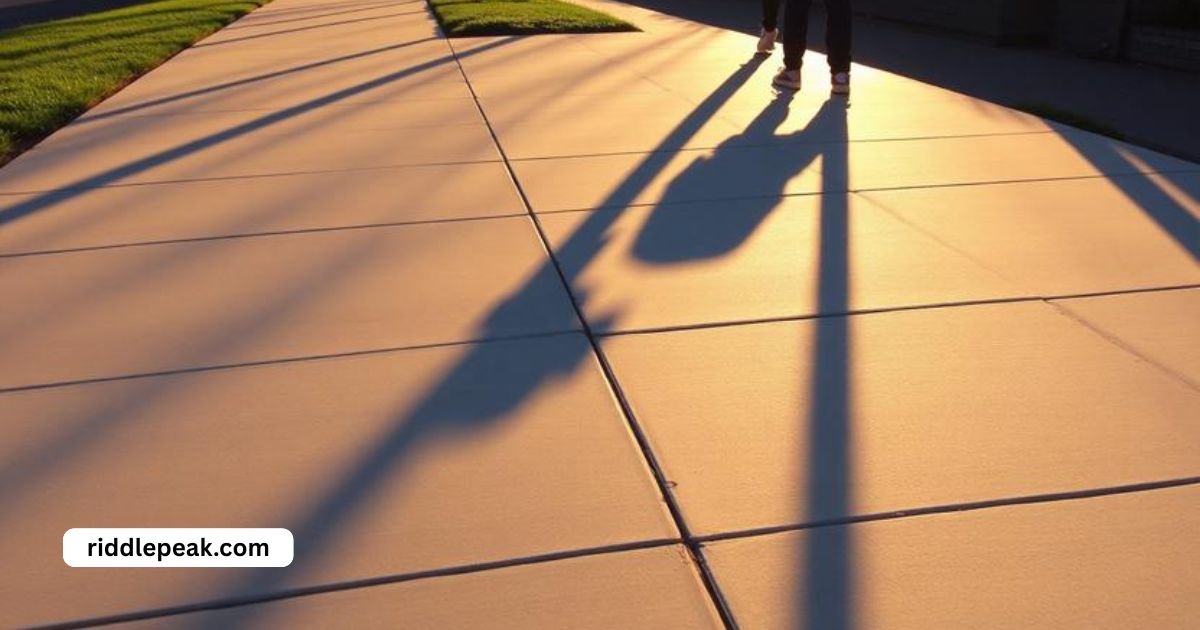
Before we dive into the list, let’s talk about what makes shadow riddles so uniquely effective for young minds. A shadow riddle uses the physical properties of shadows — the fact that they follow you, change size with the sun, disappear in darkness, and can take any shape — as the raw material for wordplay and logic puzzles.
Shadows exist at the intersection of science and imagination, which makes them perfect riddle fodder. Scientifically, a shadow forms when an opaque object blocks a light source, creating a dark area on the opposite side. For kids, that simple concept opens a world of “wait — how?” moments. A riddle like “I grow tall at sunrise and shrink at noon — what am I?” gets a child thinking about the Earth’s angle relative to the sun without ever opening a textbook.
In classrooms, shadow riddles work brilliantly as bell-ringers, brain-break activities, and science warm-ups. Parents use them on road trips, at dinner tables, and during the five-minute chaos before bedtime. They are a genuinely flexible learning tool disguised as a game.
Shadow riddles also build vocabulary organically. Words like silhouette, penumbra, opaque, and eclipse become memorable when they appear inside a puzzle a child is motivated to solve. That’s what separates a good riddle from a worksheet — the emotional hook of wanting to figure it out.
What’s more, shadow-themed riddles have roots going back centuries. Ancient Greek philosophers like Plato famously used shadow allegories (most notably, the Allegory of the Cave) to explore truth and perception. While kids don’t need to know that context to enjoy a good riddle, the tradition of using shadows as metaphors for thinking runs deep in human culture.
Now, let’s get to the riddles.
What Is a Good Riddle About a Shadow? (Easy Shadow Riddles for Kids)
These riddles are perfect for kindergartners through second graders (ages 5–8). They rely on simple, direct observations about shadows — their most obvious traits like following, disappearing at night, and copying movement. Short sentences, familiar scenarios, and single-step logic make these immediately accessible and fun.
Read these aloud slowly and give kids 15–20 seconds to think before revealing the answer.
Funny Shadow Riddles for Kids (Grades 1–4)
Humor makes riddles stick. These funny shadow riddles use wordplay, absurd scenarios, and silly comparisons to get kids giggling while they think. The comedic technique used in each riddle is noted — knowing the mechanics helps teachers use these as mini-lessons in creative language.
Shadow Riddles About Nature (Animals, Trees, the Sun & Moon)
These riddles use the natural world as their setting — perfect for science class, nature walks, or outdoor education programs. They involve animals, plants, and astronomical phenomena that produce interesting or surprising shadows.

Explore here about Autumn riddles for kids and Nature riddles!
Shadow Puppet Riddles (Creative & Imaginative)
Shadow puppets are one of the oldest forms of storytelling in the world — a tradition dating back over 2,000 years in China and Southeast Asia. These riddles tie the shadow concept to the beloved activity of making shapes with your hands in the dark. Perfect for sleepover games, campfire nights, and creative writing classes.

Medium Shadow Riddles for Kids (Grades 3–5)
Now the brain truly has to work. These medium-difficulty riddles involve more complex reasoning — multiple steps of logic, less obvious clues, or indirect descriptions of shadow behavior. Ideal for ages 8–11.
Hard Shadow Riddles for Kids (Grades 4–6 & Gifted Learners)
These riddles challenge deeper thinking — spatial reasoning, scientific concepts, and multi-step logic. They’re perfect as homework extension challenges, gifted enrichment activities, or for competitive puzzle enthusiasts.
Seasonal Shadow Riddles (Winter, Summer, Spring & Fall)
Shadows change dramatically with the seasons — because Earth’s tilt changes the angle of the sun. These riddles connect shadow science to the calendar, making them perfect for seasonal classroom activities.

Riddles About What a Shadow Is NOT (Critical Thinking Series)
These riddles sharpen critical thinking by presenting shadow-like clues that don’t lead to “a shadow.” Children who have been answering “a shadow” repeatedly will be surprised — and that surprise is exactly where deep learning happens.
Shadow Riddles for Classroom Science (Light & Optics Theme)
These riddles are written specifically to align with elementary-level light and optics science curriculum — perfect as bell-ringers, exit tickets, or science center activities.
Silly & Imaginative Shadow Riddles (Grades K–3)
Pure fun. These riddles use whimsy, imagination, and silliness to engage the youngest readers and listeners. No science required — just giggling.
More Easy Shadow Riddles (101–130)
More Medium & Hard Shadow Riddles (131–180)
Final 50 Shadow Riddles (151–200) — Mixed Difficulty
How Do Shadow Riddles Help Kids Learn? (FAQ)
Shadow riddles aren’t just fun — they’re a genuinely powerful learning tool. Here’s what happens cognitively when a child engages with a shadow riddle:
Critical thinking: Riddles require kids to hold multiple clues in working memory and test hypotheses (“Is it a person? Is it an animal? Wait — it has no legs…”).
Science vocabulary: Words like penumbra, umbra, opaque, silhouette, and eclipse are absorbed in a low-pressure, high-motivation context.
Language development: Riddles model figurative language — personification, metaphor, paradox, and pun — in a format children actively want to decode.
Spatial reasoning: Understanding how shadow length changes with sun angle is inherently spatial — it trains kids to visualize 3D relationships on a 2D plane.
Teachers who use five-minute riddle warm-ups before science lessons report better question engagement and more spontaneous observation comments during outdoor activities. That’s the power of activating curiosity before instruction.
Discover here 200 Scary Riddles for Kids With Answers!
What Are Some Tricky Shadow Riddles With Answers?
For kids who want a real challenge, the trickiest shadow riddles in this list are numbers 36, 55, 62, 63, 64, and 144. These range from solar eclipse physics to the mathematical relationship between shadow length and sun angle. Riddle #62 (about shadows potentially traveling faster than light) is particularly mind-bending — it’s based on real theoretical physics and makes an excellent discussion starter for curious older students.
Conclusion
From a toddler chasing their shadow on the sidewalk to a sixth grader calculating sun angles for a science project, shadow riddles meet every child exactly where they are. The 200 riddles in this collection cover the full spectrum — silly and sweet for kindergartners, scientifically rich for gifted learners, and seasonally relevant all year long.
Shadow riddles are one of the rare tools that teach without feeling like teaching. Bookmark this page, share it with a teacher friend, or read ten of these aloud at dinner tonight — and watch the faces light up. That’s the magic of shadows: they make even the absence of light feel bright.
FAQ Section
What Is A Good Riddle About A Shadow?
A good shadow riddle uses one of the shadow’s real properties — following you, disappearing at night, changing size with the sun — as its central clue. For example: “I grow tall at sunrise and vanish by noon — what am I?” (Answer: a shadow.) The best riddles use misdirection, making the child think of a living thing or a person before the “aha” moment of the simple answer.
What Are Easy Shadow Riddles For Kindergartners?
The easiest shadow riddles use direct, observable facts: “I follow you everywhere but never make a sound” or “I copy every move you make.” These work because five-year-olds already notice their shadows — the riddle simply invites them to describe what they already know in a puzzle format. Riddles #1–20 in this collection are specifically designed for kindergarten through Grade 1.
How Do Shadow Riddles Help Kids Learn?
Shadow riddles develop critical thinking, science vocabulary (umbra, penumbra, opaque, silhouette), language skills (pun, metaphor, personification), and spatial reasoning. They are particularly effective as classroom warm-ups before light and optics science lessons, as they activate prior knowledge and curiosity before formal instruction.
What Are Some Tricky Shadow Riddles With Answers?
Tricky shadow riddles include those involving eclipse science, color shadows, trigonometry, and Earth’s rotation. Examples: “I travel faster than light — but I’m made of its absence” (a shadow) and “I was used to measure the circumference of the Earth — by someone who never left Egypt” (Eratosthenes using shadow angles). These are best suited for Grades 4–6 and gifted learners.
What Shadow Riddle Has The Answer “A Shadow”?
The vast majority of shadow riddles have “a shadow” or “your shadow” as the answer — that’s the beauty of the topic! The key to making these riddles engaging rather than repetitive is using different properties of shadows as the clue: following behavior, size changes, disappearing at night, intangibility, being cast on different surfaces, and appearing in different colors under colored light.